
Timbertech Cedar Maintenance

5 Signs Your Cedar Needs Attention

5 Signs Your Cedar Needs Attention

11 Sep 2025
Signs your cedar needs attention

Cedar needs to be recoated every 2-3 summers to protect the timber from New Zealand’s harsh UV rays.

By applying an oil or a stain, the boards are protected by a coating that takes the brunt of the UV rays, but over time, it will break down and needs to be reapplied.

Knowing what signs to look for will help you stay on top of maintenance before small issues turn into larger, more expensive problems.

1. Discolouration

Discoloration is often the first sign that your cedar needs attention. It happens when the UV rays begin to break down the existing coating, allowing the natural colour of the timber to come through.

A generously applied oil will fill the pores of the Cedar and leave a protective tint on the surface. This dual action helps the wood resist moisture and absorbs the worst of the sun’s rays.
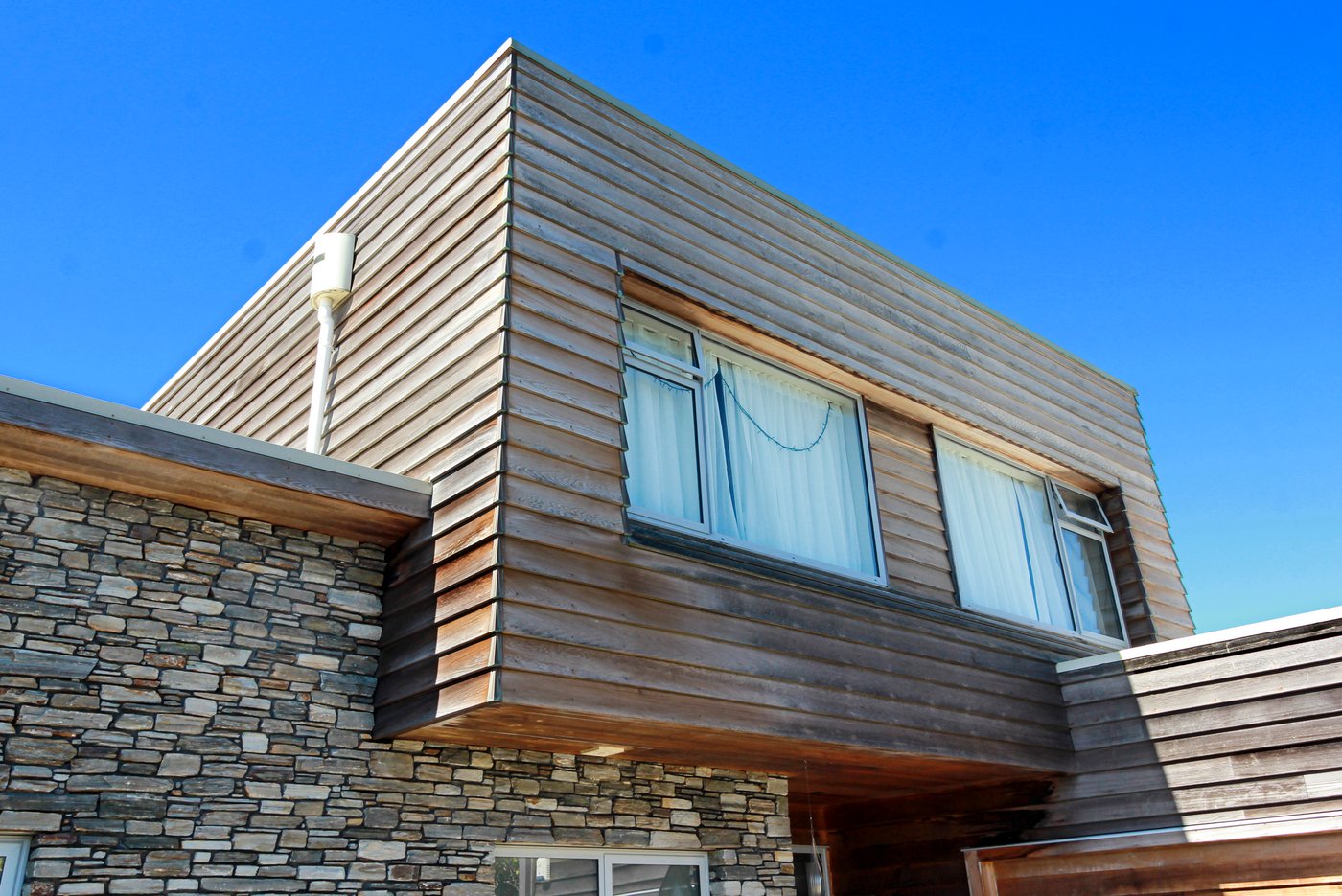
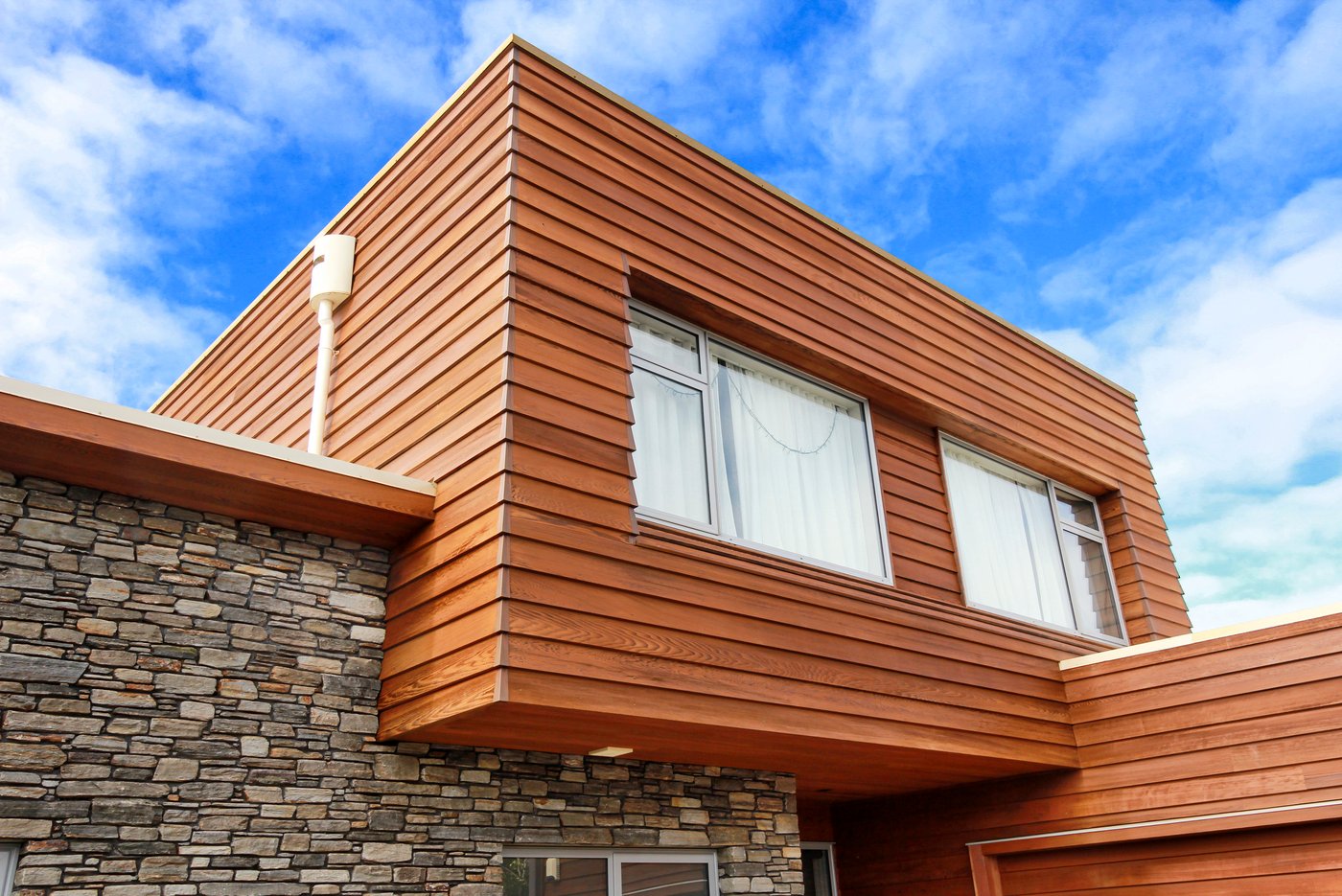
With oil, you can tell if the Cedar is dry by spraying water onto the surface. If the water beads off, the boards still have a reservoir of oil. If the water soaks in, you probably need to recoat.
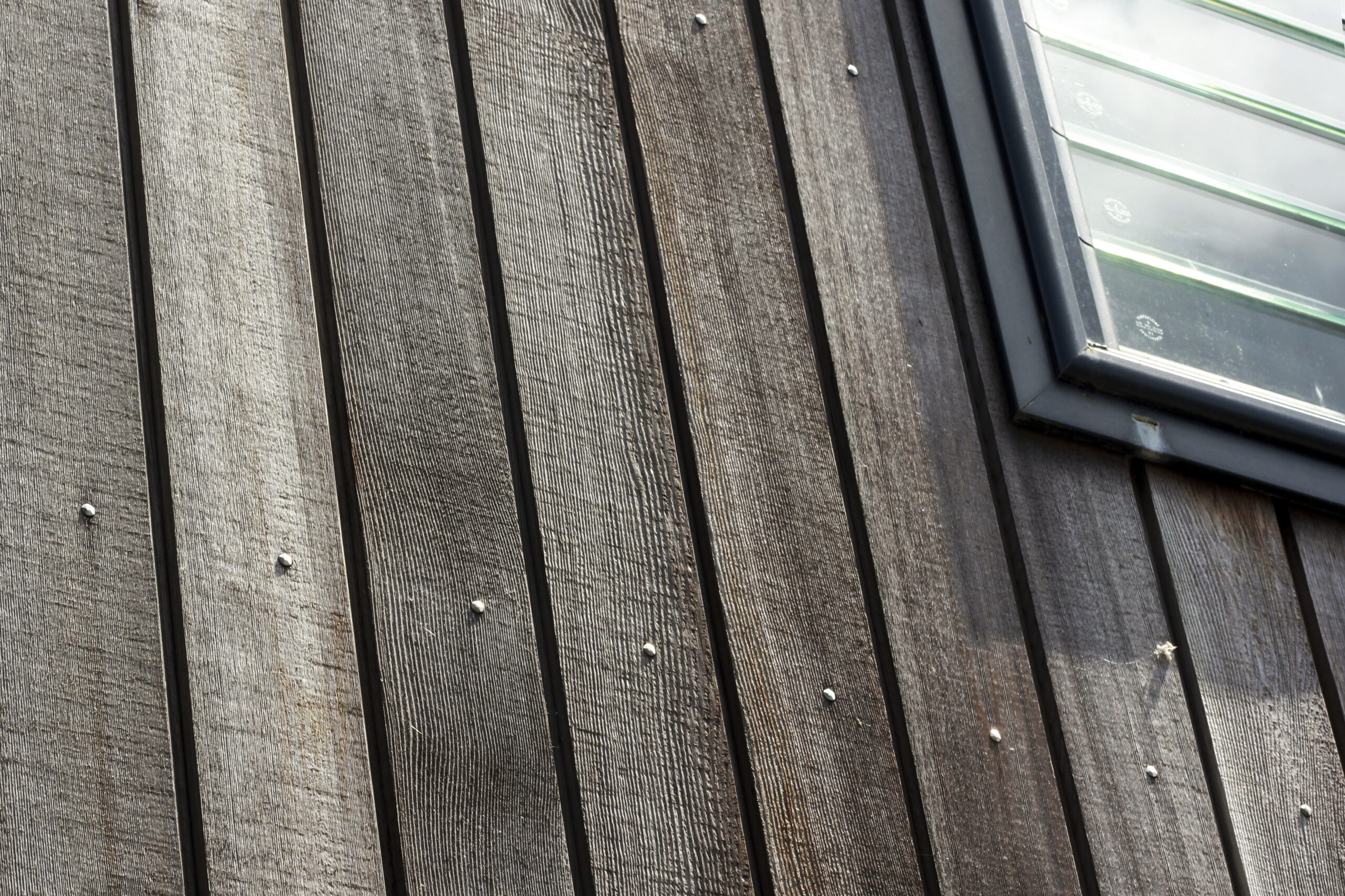
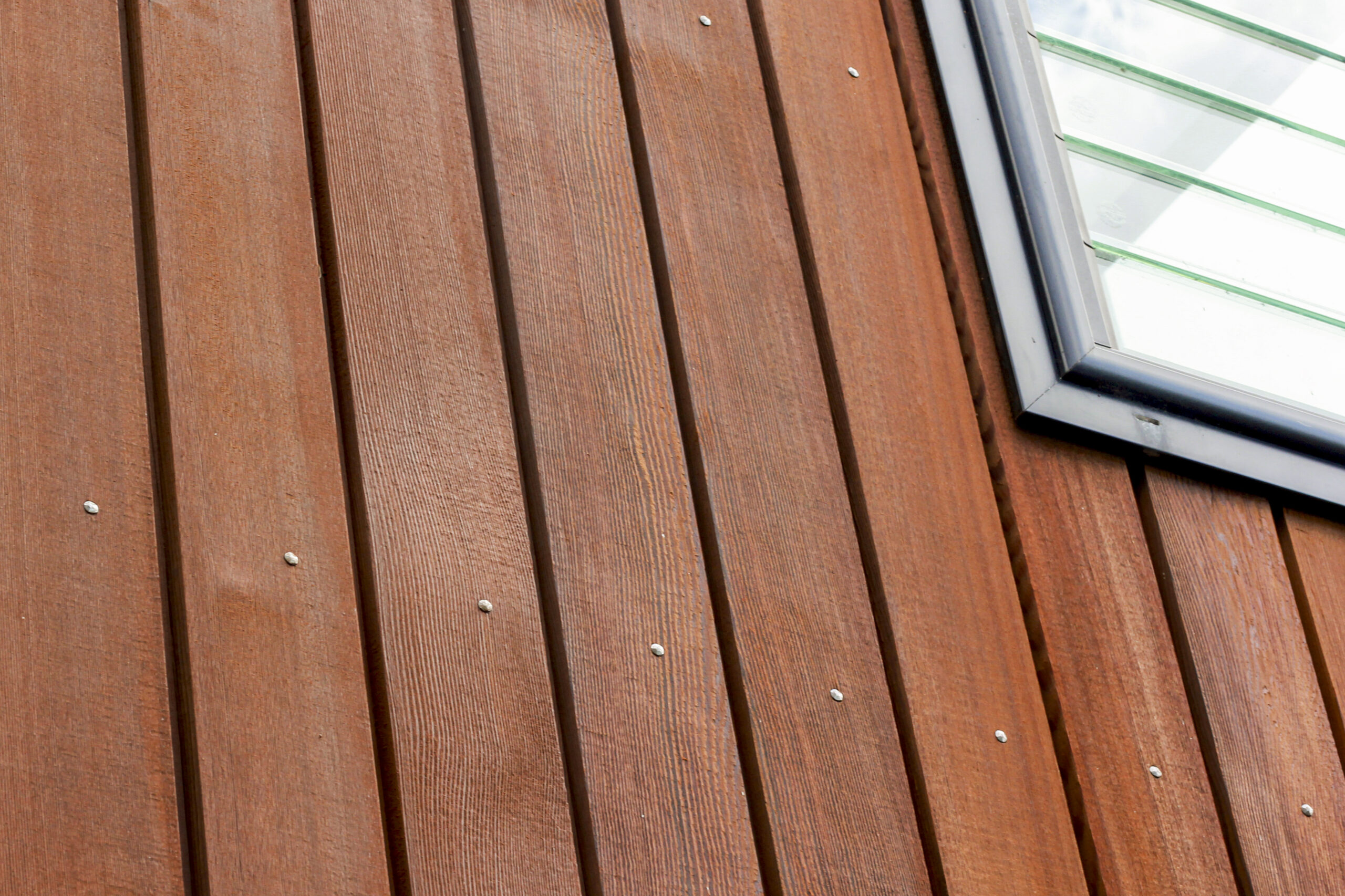
Stains work similarly, creating a barrier that shields the timber. Over time, the stain will oxidise and erode by design – this means it’s doing its job by absorbing the UV damage – resulting in a patchy, uneven appearance with lighter and darker areas.

2. Fading or silvering

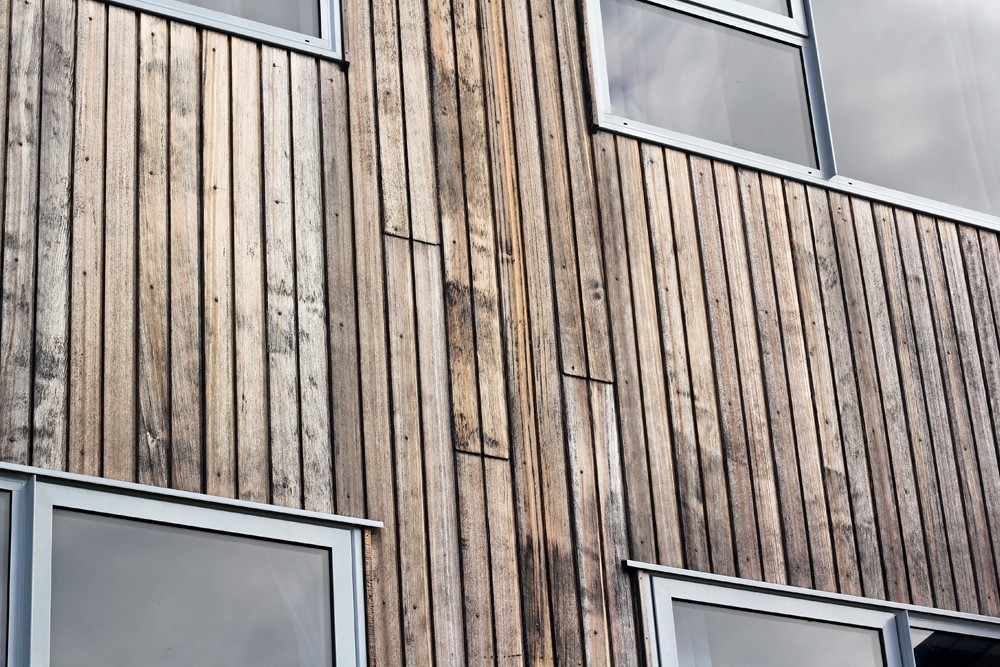
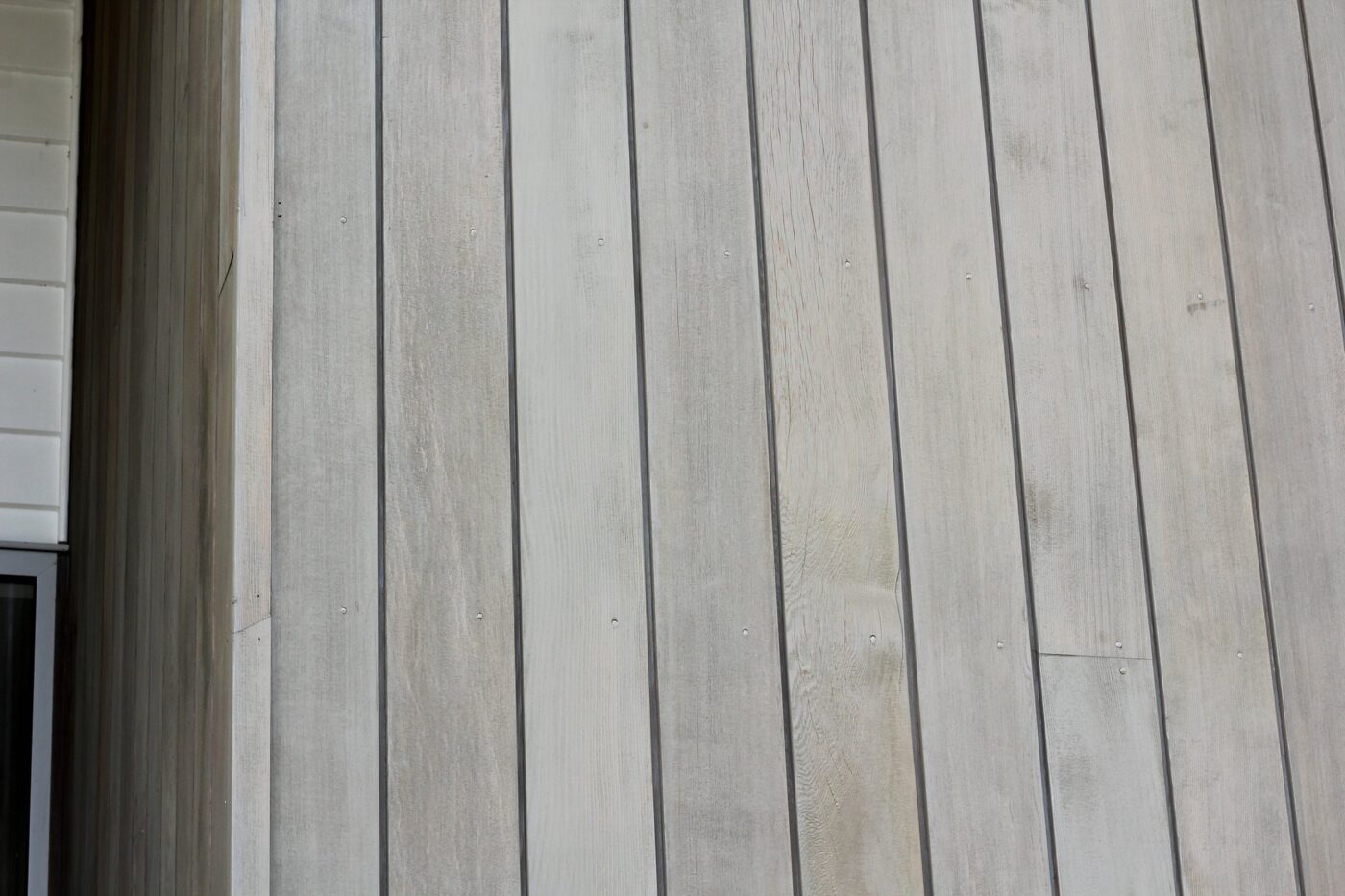
Silvering is caused by exposure to UV rays, which fray and loosen the top cells of the Cedar and cause the surface to become bleached.

While some people prefer this aged appearance, it can be a problem in warm, damp climates. The roughened surface of the wood can trap moisture, dirt, and bacteria, causing the Cedar to turn black.

If you like the silvered look, you can get protective oils with a silver tint that will give you the aesthetic you want while still protecting your Cedar from the sun.
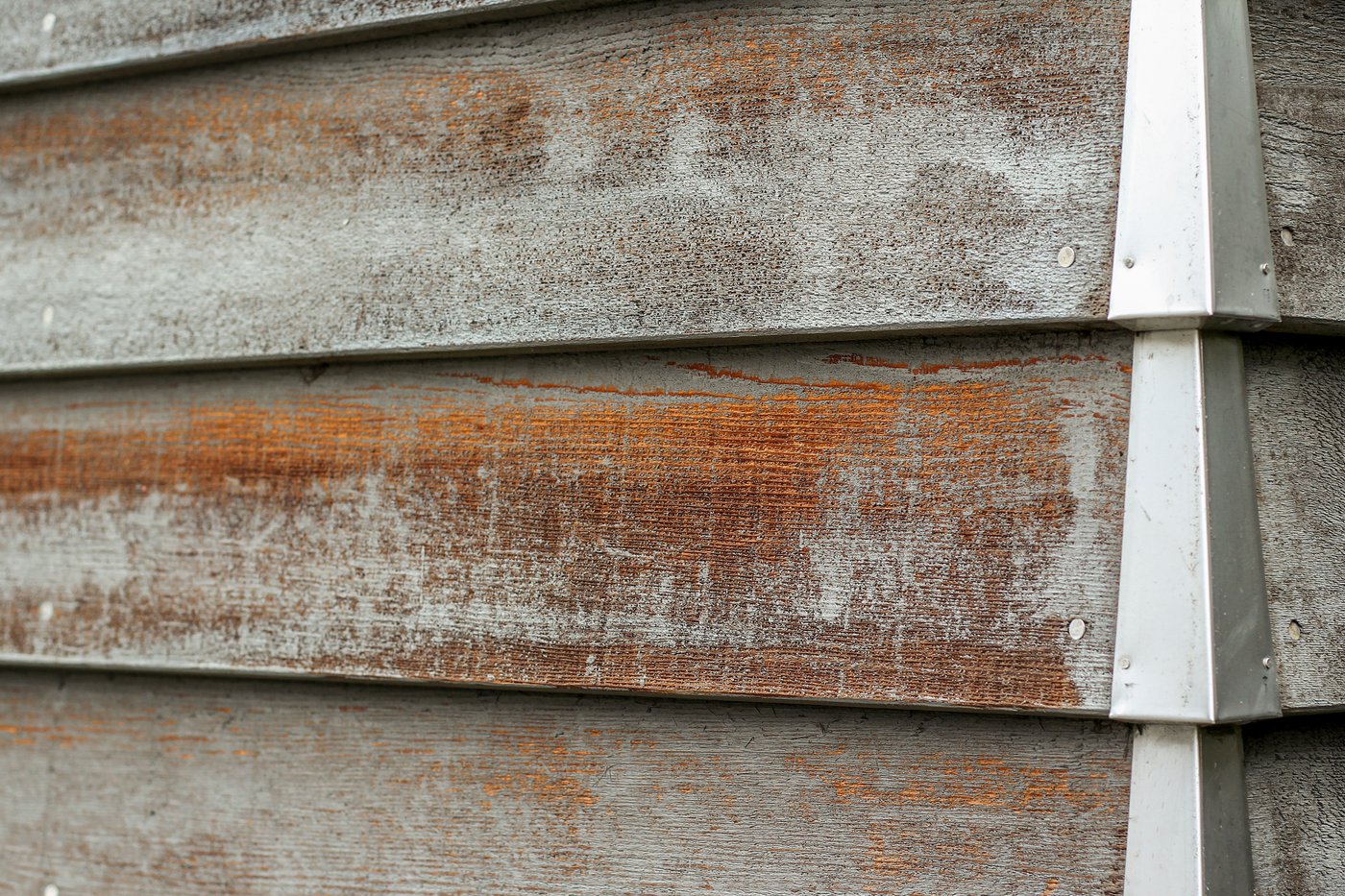
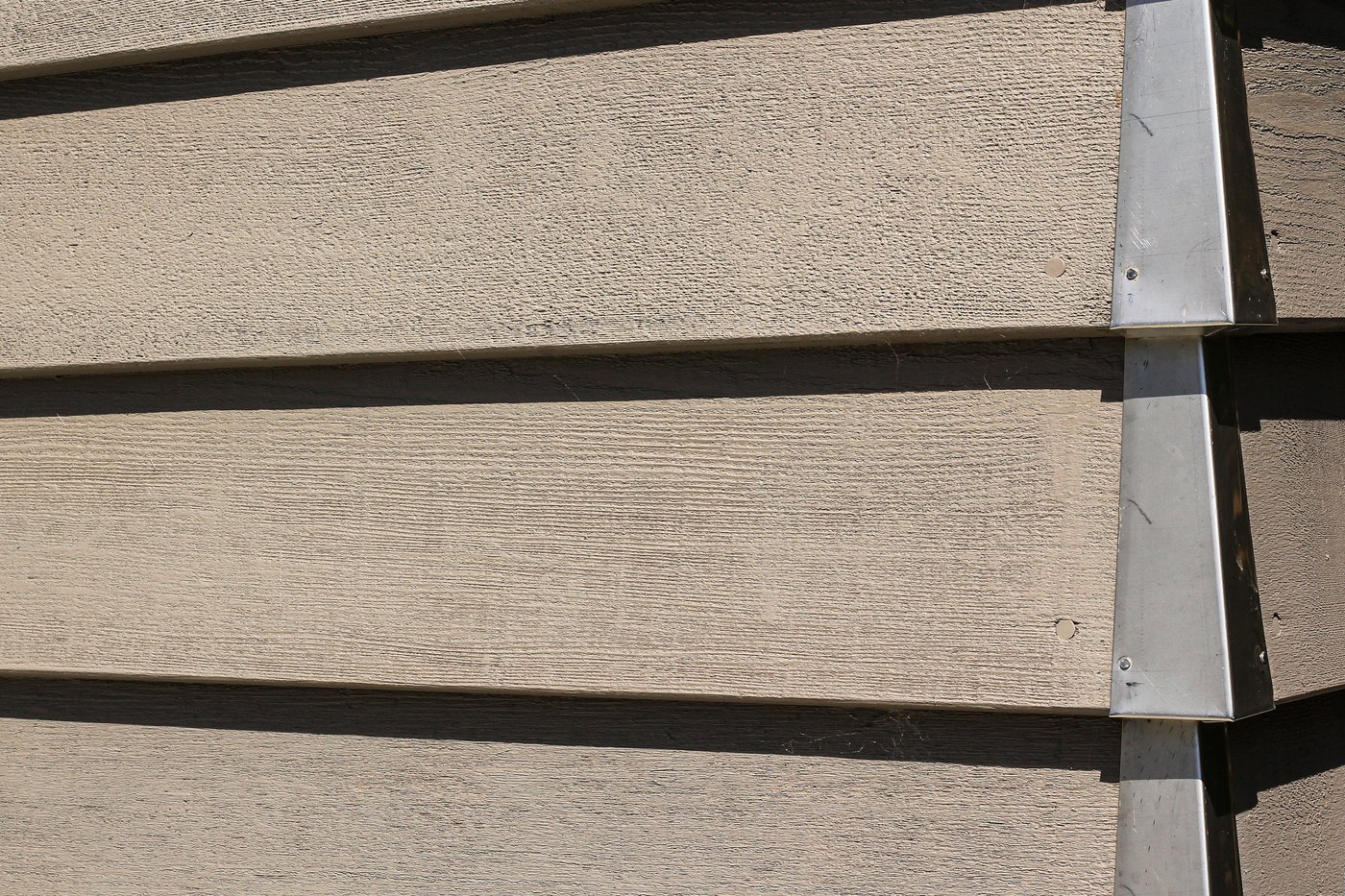
Img 2759 Before Img 2759 After

3. Patchy or uneven colour

Patchy or uneven colour on your Cedar can be a sign of a few things. The previous coating might have been applied unevenly, or it could be breaking down faster in some areas than others for a variety of reasons.

A well-maintained Cedar home should have a consistent colour across all its walls. If your home hasn’t been maintained in quite some time, the faces of the house that gets more direct sun exposure will fade faster than the shaded faces.

Reapplying an oil or stain not only enhances the colour but also helps replenish the wood’s natural oils and fortify its anti-fungal properties, restoring its vibrant, like-new appearance.
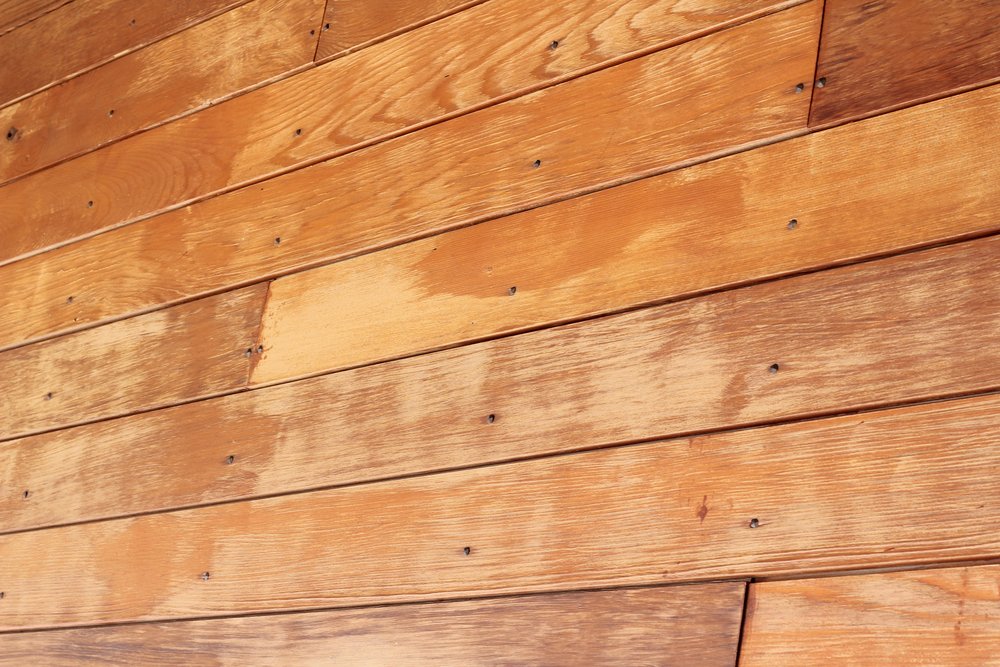
cedar-stain-to-oil-before-1 cedar-stain-to-oil-after-1

4. Mould and lichen forming

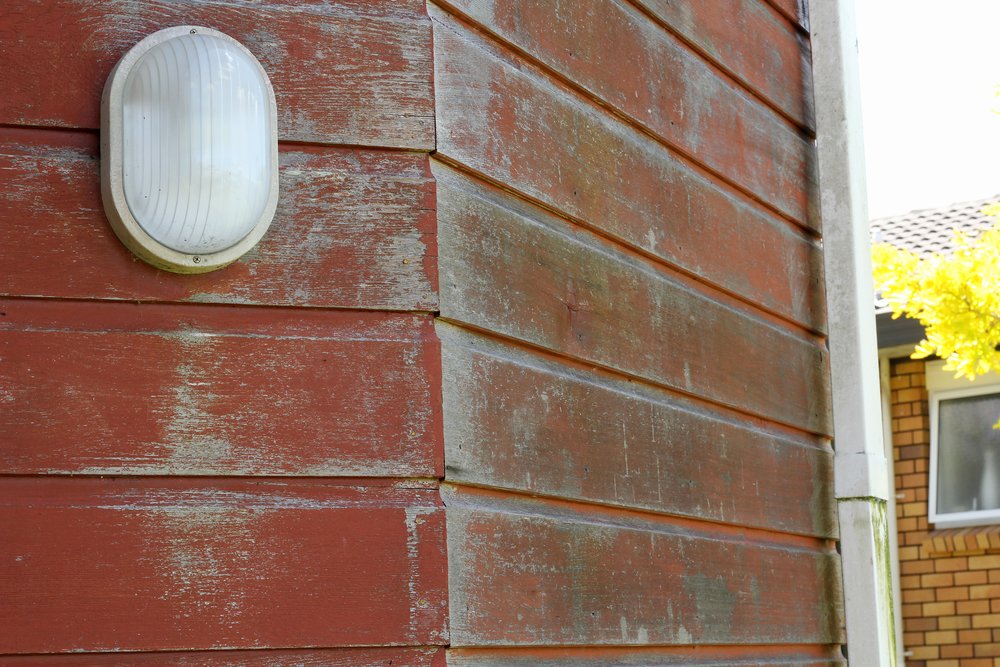
Mould and lichen often grow on the damper areas of your house away from the sun. Mould can appear on the surface coating or might be ingrained in the timber if it’s been left for a while.

The first signs of mould are small black spores that look like spots or splatters, and as it gets more severe it will get more obvious, turning black, green or red.
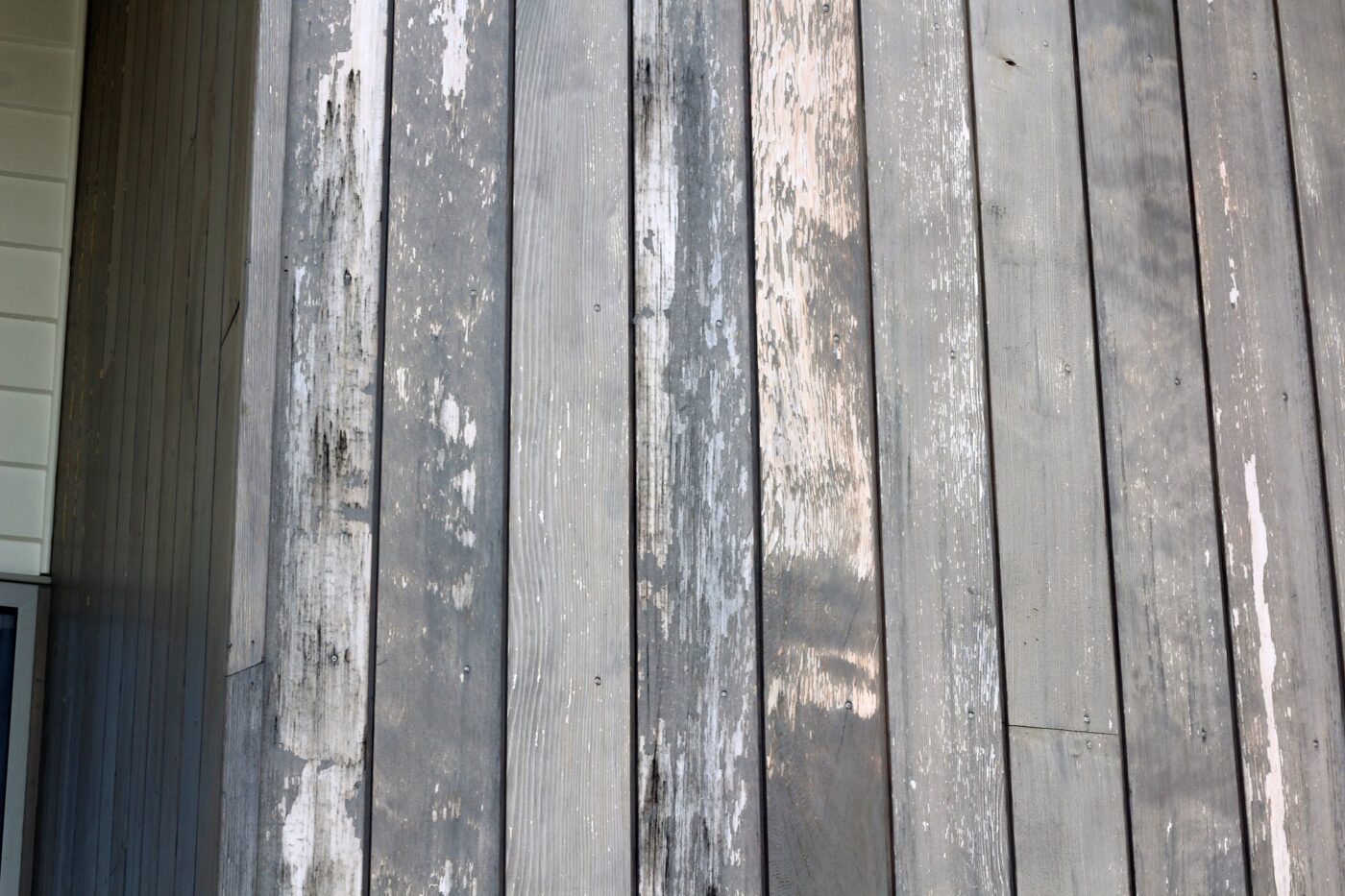
Img 2426 Img 5196

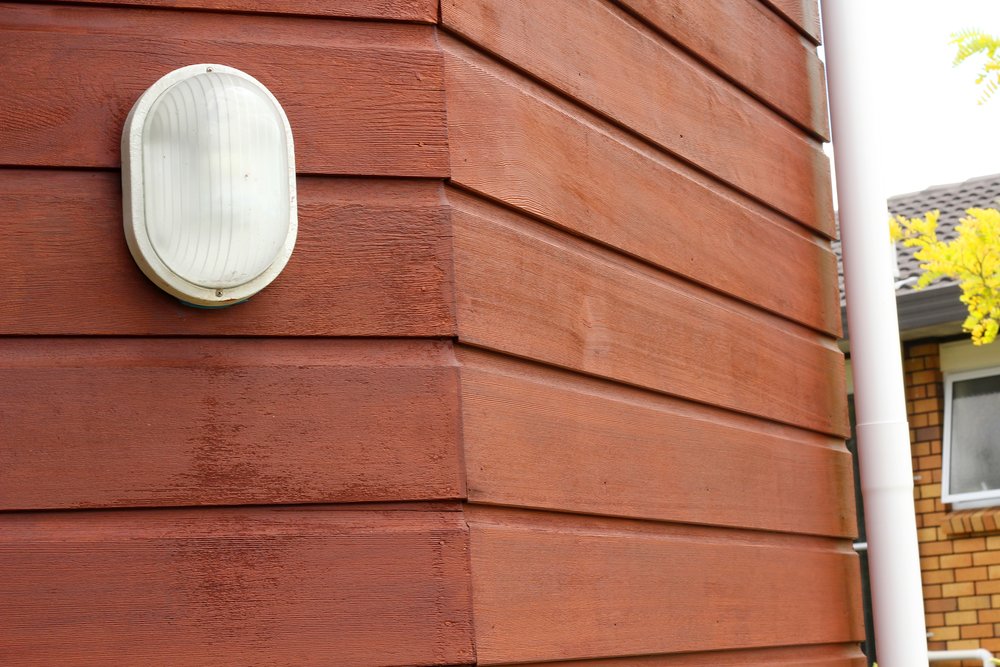
Signs of mould and lichen are not always a big concern. Get a professional to look at it, and if you catch it early enough, you might just need a clean without having to recoat the timber.
cedar-restoration-before cedar-restoration-after

5. Cracks, or worse

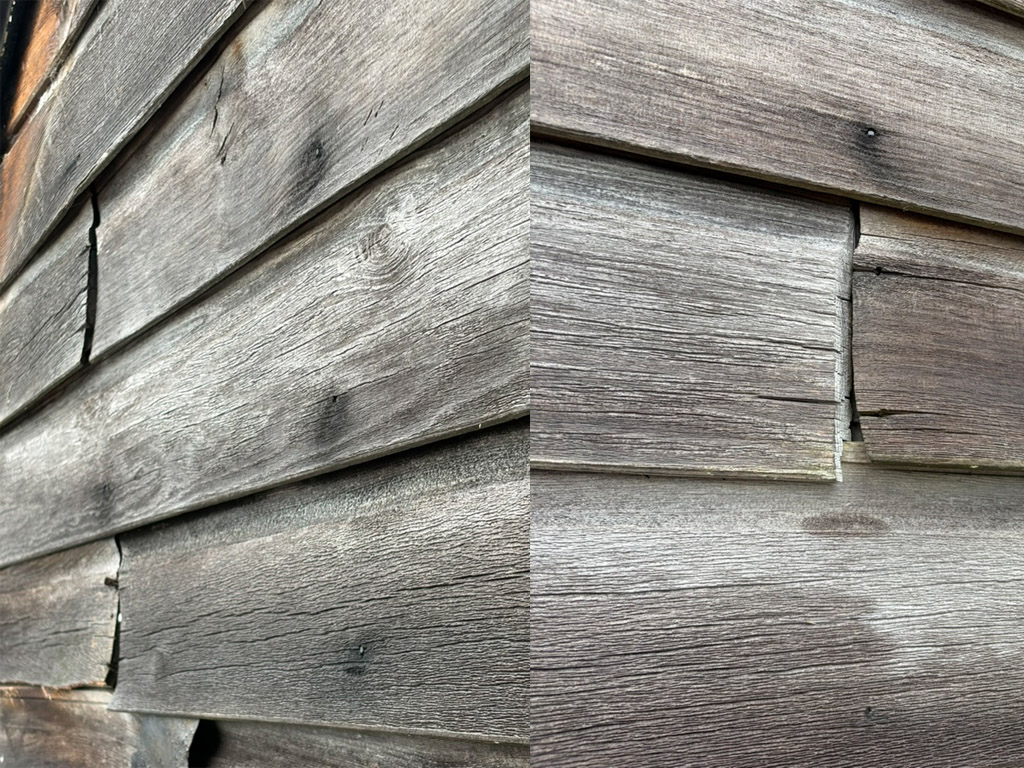
Look for small cracks appearing, either in the coating or the boards themselves. Those little cracks are allowing moisture to get into the boards and create a toehold for mould, mildew and lichen to get established.

If nails are popping out, or you can see warping, this is a sign that the boards are moving a lot. This usually happens on the north face, or any area that is exposed to the sun and doesn’t have any protection against the wet-dry-wet effect.
Cupped cedar

If your boards are starting to cup, it doesn’t mean the boards are beyond repair. Often the structural integrity of the boards is still good, we just need to clean them up and replace the oil to reduce the surface tension and repel water.

Final thoughts…

Knowing the signs that your Cedar needs attention helps you make an informed decision about when to invest in its health.

If you’re unsure, it’s always best to have a professional take a look.

We offer a free, onsite Cedar Assessment across Auckland and Northland. One of our Cedar experts will provide a genuine assessment of your timber and offer advice to keep your Cedar protected and looking beautiful for years to come.

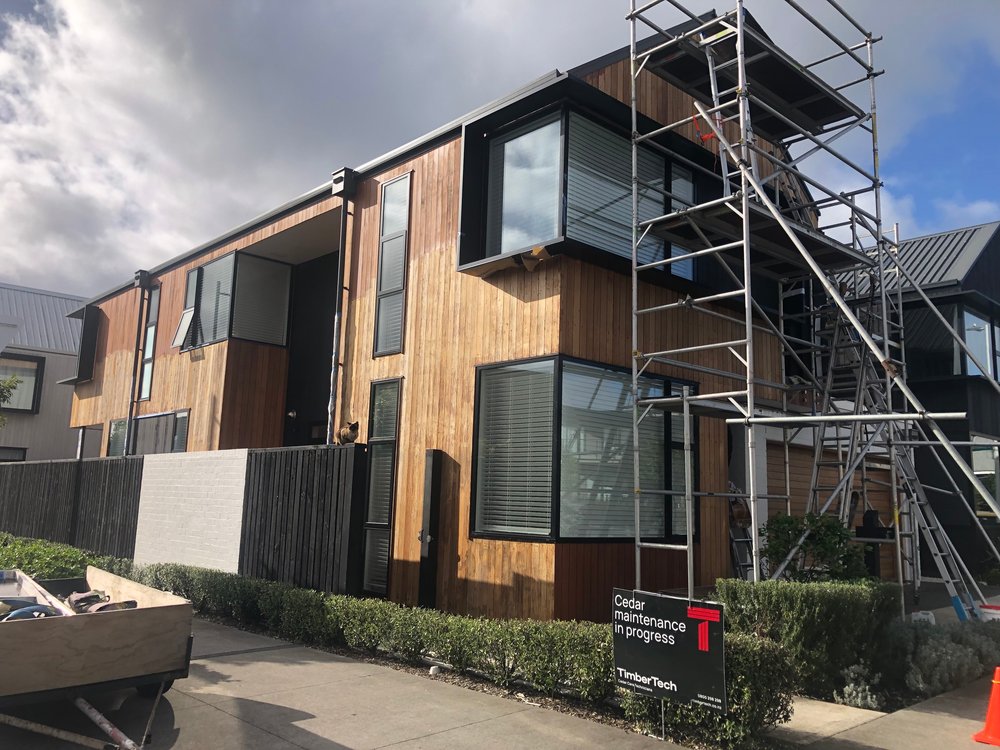
Read More Articles

15 Feb 2023
The quick answer is: not as often as you might think. On a wall that is not in the intense sunshine, Cedar will practically last forever.

The quick answer is: not as often as you might think. On a wall that is not in the intense sunshine, Cedar will practically last forever.

Apart from being stunning to look at, Cedar is extremely durable, a superior insulator and genius at taking up deep-penetrating oil. Cedar’s worst enemy is not rain, or wind, or city grime; it’s the harsh New Zealand sun. 

Left unprotected, UV rays will eventually dry out the timber, leading to fine cracks and roughening of the surface. This creates a toehold for mould, mildew and lichen to get established and make the timber look unsightly.

Regular oiling will prolong the beautiful look and weather resistance of your Cedar by penetrating deeply through the Cedar’s open cellular structure and replacing the natural oils lost over time.

Keep reading to learn how often you need to maintain your Cedar, or watch the video below for a quick summary.

What Does Regular Maintenance Involve?

For most Cedar homes, regular maintenance will consist of a light rinse once per year at the end of winter, then a recoat of exposed areas every 2-3 summers.

Cladding only needs to be maintained on a face that is exposed to the UV rays. The remaining faces will also benefit from recoating, but this might only be 2 or 3 times over a 15-year period. The treatment that is required is very dependent on the level of UV exposure and other environmental factors.

exposed-cedar

Think of it like washing your car. If you don’t wash your car for 12 months, all the dust, debris and contaminants from the road will stick to the body. It’s the same for your house, but not as easy to spot as houses are usually flat colours compared to a shiny paint job.

How Much Will Regular Maintenance Cost?

It’s a misconception that owning a Cedar home means you will be burdened with expensive maintenance bills. Compared to houses that require regular painting, Cedar works out far more economical.

The cost will depend on the unique requirements of each house. The main factors will be the size of the house, how many stories it has and ease of access. A single-story bungalow with good access might cost $2-3k every 2-3 years. For a multi-level property with difficult access, you might be spending $8k on scaffolding before you even start looking at the timber.

Regardless of the cost, regularly maintaining your Cedar will always be cheaper over the long run than painting, or the worst-case scenario, having to reclad due to the timber cupping and splitting.

Having a regular maintenance plan can help to spread out the cost and give you peace of mind that your investment is protected – and will look beautiful for years to come.

New Builds vs Older Houses

Newly installed Cedar has a reservoir of natural oils and tannins, and it will take longer for the cellular structure to start to move. You may not have to do anything for 5 years, but eventually the Cedar will start to dry out and you will need to slow that process down with regular oiling.

New Cedar will most likely be pre-coated, or coated on-site before it gets installed. There will usually be a booklet that comes with the house telling you how the Cedar has been treated and what kind of maintenance it needs.

For a pre-existing Cedar home, the new homeowner will need to ask the previous owners what kind of maintenance plan they had in place, or what products they have used in the past. If the Cedar has been stained and the stain is in good condition, then it requires a light rinse every year and a recoat every 2-3 years, depending on the level of UV exposure.

If you are unsure about the status of your Cedar, one of our team can come around and advise you on what treatment it has received in the past, and what is required to maintain the Cedar over the lifetime of the house.

Make Your Cedar Look New Again

TimberTech are NZ’s #1 choice for Cedar protection, maintenance and restoration. Our unrivalled expertise and craftsmanship have been developed and proven over 20 years throughout New Zealand.

We will diagnose your Cedar and put together a 10-year maintenance plan, customised to your unique situation, with a maintenance schedule and a full breakdown of all the costs. There is no obligation and our goal is always to look after the best interests of our customers over the lifecycle of their homes.

To find out more, call us on 0800 298 298.

Read More Articles

Showing 1 - 10 of 17

Subscribe

Sign up to our quarterly newsletter for all the latest Cedar tips and expert advice.