
Timbertech Cedar Maintenance

Rain, Temperature, and Timber: Busting the Biggest Cedar Care Myths

Rain, Temperature, and Timber: Busting the Biggest Cedar Care Myths

25 May 2026
Cedar care myths

As the cooler, damper months roll in, many homeowners take one look at their Cedar cladding and decide to put off maintenance until summer. It is a natural reaction. We are conditioned to believe that outdoor home maintenance – especially involving coatings – is strictly a warm-weather task.

The reality is quite different. When we look at actual climate data, the perception of winter as a non-stop deluge is quickly debunked. On average, a typical summer month might see about 8 fully wet days, while a winter month averages around 15. While that is roughly double, it still leaves at least 15 perfectly dry, workable days every single month.

Waiting for the “perfect” season to protect your Cedar often does more harm than good. In this article, we dismantle the four most common myths surrounding Cedar care and wet weather, giving you the facts you need to protect your investment year-round.

Myth 1: “Cedar oil behaves just like paint, so it won’t dry or cure in the cold.”

The Preconception:

Homeowners often treat paint and wood oil as identical products. Because acrylic paints and film-forming stains require a strict, warm temperature window to dry and cure properly, people assume Cedar oil suffers from the same limitations in winter.

The Facts:

Paint and oil are fundamentally different chemical formulations, and they protect wood in entirely different ways:

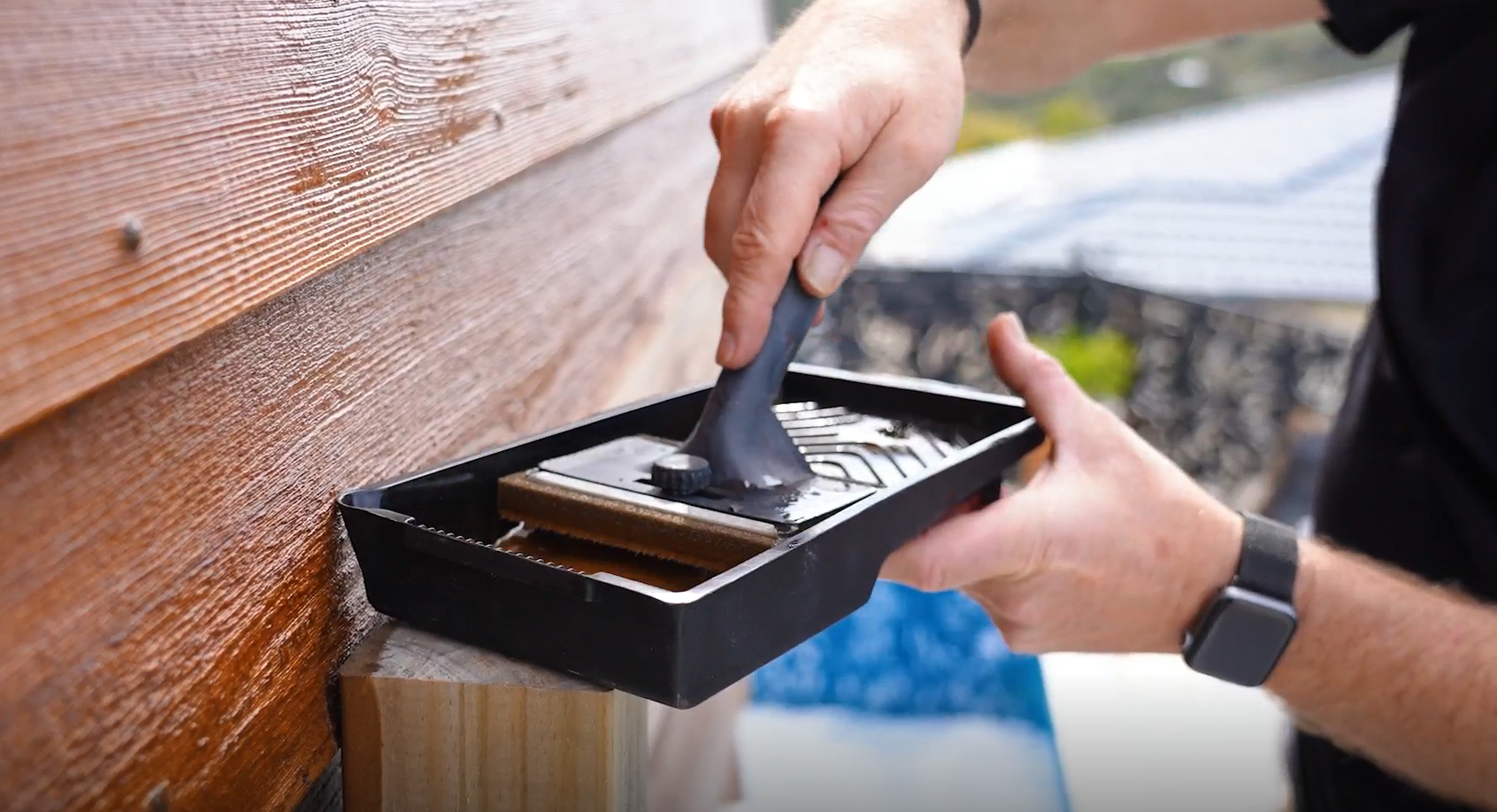
  • Paint Cures, Oil Absorbs: Paint must dry on the surface to form a solid, protective film. If it is too cold or damp, this curing process fails, leading to peeling, cracking, or poor adhesion. Premium Cedar oils (such as Wood-X) do not “cure” or form a surface film at all. Instead, they penetrate deep into the cellular structure of the timber.

  • Wider Temperature Tolerances: Because oil relies on absorption rather than evaporation and chemical curing, it is incredibly forgiving. While oil absorption does slow down slightly in cold temperatures, the final appearance and protective qualities of the finish remain completely unaffected by the lower temperatures.

  • Timber Thirst Dictates the Speed: The age and condition of your Cedar play a big role in how fast the oil is taken up. If you are oiling highly weathered Cedar, the dry, porous wood is so thirsty that it absorbs the oil almost instantly, drying to the touch almost immediately even on a brisk winter day. Newer cladding takes slightly longer to absorb, but the oil still makes its way safely into the timber without needing heat to set.

Myth 2: “You can’t coat Cedar if rain is forecasted.”

The Preconception:

There is a widespread belief that the mere threat of a shower means Cedar maintenance must be ground to a halt.  Homeowners worry that a sudden downpour will wash the product away or trap moisture under the finish.

The Facts:

While we absolutely do not apply oil during heavy, persistent rain, our teams easily navigate sporadic winter weather through smart planning and technical tools:

  • Cedar Dries Exceptionally Fast: Cedar is a lightweight, highly porous timber. Unlike dense hardwoods, as soon as a rain shower passes and a bit of wind or sun hits the boards, they dry out incredibly quickly.

  • The Hour Window: Once applied, oil only needs about an hour of dry weather to soak safely into the wood fibers. Once it has absorbed, even direct rainfall shortly afterward will not ruin the protective application or damage the cladding.

  • Micro-Climate Scheduling: Our teams don’t just look at the sky; they look at the wind direction and the layout of your home. If there are sporadic showers, we adapt by working on the sheltered sides of the house, letting the weather blow past while keeping the job moving along.

Myth 3: “If you wash my house but wait a few days to oil it, the Cedar will get dirty again.”

The Preconception:

The standard restoration process requires washing the Cedar first to clean it, followed by applying the oil. Homeowners are often nervous if there is a gap of a few days or even up to two weeks between these two stages, fearing that dust or light rain in the interim will ruin the final finish.

The Facts:

Managing workflows by separating the washing and oiling stages is a standard, highly effective practice – especially in winter. It allows us to keep jobs moving along and make the best use of dry weather windows.

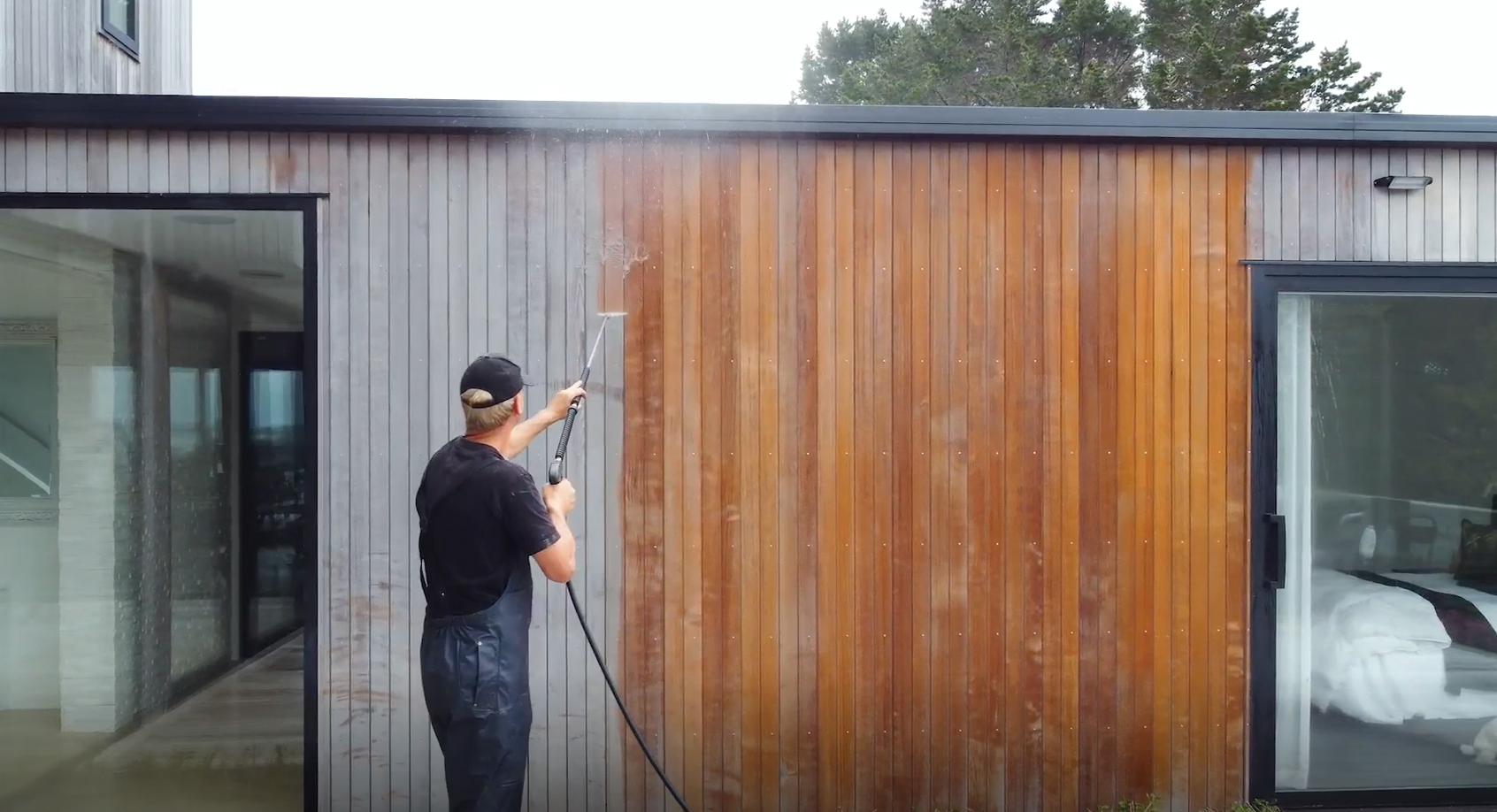
  • Targeted Deep Cleaning: The initial wash we perform is not a superficial rinse. It is designed to kill and extract deeply ingrained mold, fungi, organic spores, and stubborn environmental grime. Once these elements are chemically treated and washed away, they do not return overnight.

  • Surface Dust is Easily Managed: If a week passes between the wash and the coat, some light environmental surface dust might settle on the timber. This is entirely normal. Before we begin oiling, our team performs a quick, dry brush-down of the surface. This instantly removes any loose dust, leaving a perfectly clean slate for the oil.

Myth 4: “My Cedar will warp if there is a delay between washing and coating.”

The Preconception:

A highly specific concern that occasionally crops up is the fear that leaving washed, un-oiled Cedar exposed to winter elements for a week or two will cause the timber boards to cup, twist, or warp.

The Facts:

While timber movement is a real physical process, it does not happen overnight, nor does it happen over the course of a couple of weeks.

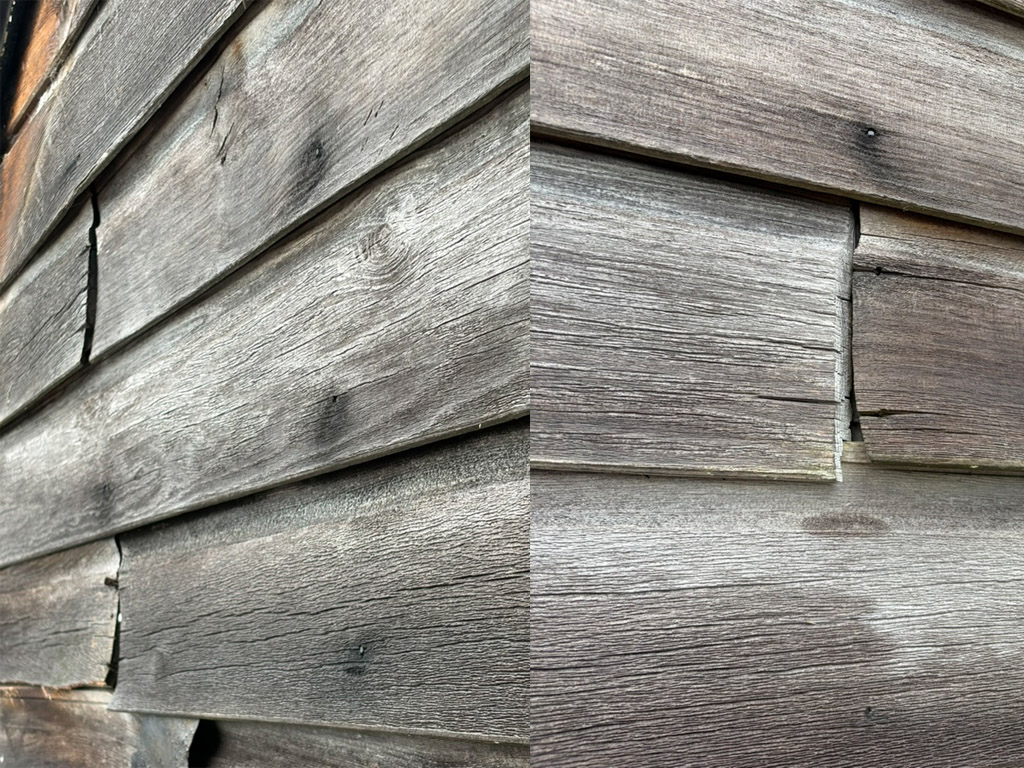
  • A Long-Term Process: Cedar warping is the result of years – often a decade or more – of cumulative neglect. It occurs when entirely unprotected timber is repeatedly saturated by winter rain and then baked dry by intense summer sun. This constant, extreme cycle of expansion and contraction over 10 to 15 years eventually breaks down the cellular structure of the wood, leading to cupping and warping.

  • Two Weeks is Harmless: A temporary delay of a few days or a couple of weeks between washing and coating has absolutely zero impact on the physical stability of the wood. The timber will not warp, degrade, or shift in that brief window. It is a completely safe operational timeframe.

Conclusion: The Best Time to Protect Your Cedar is Now

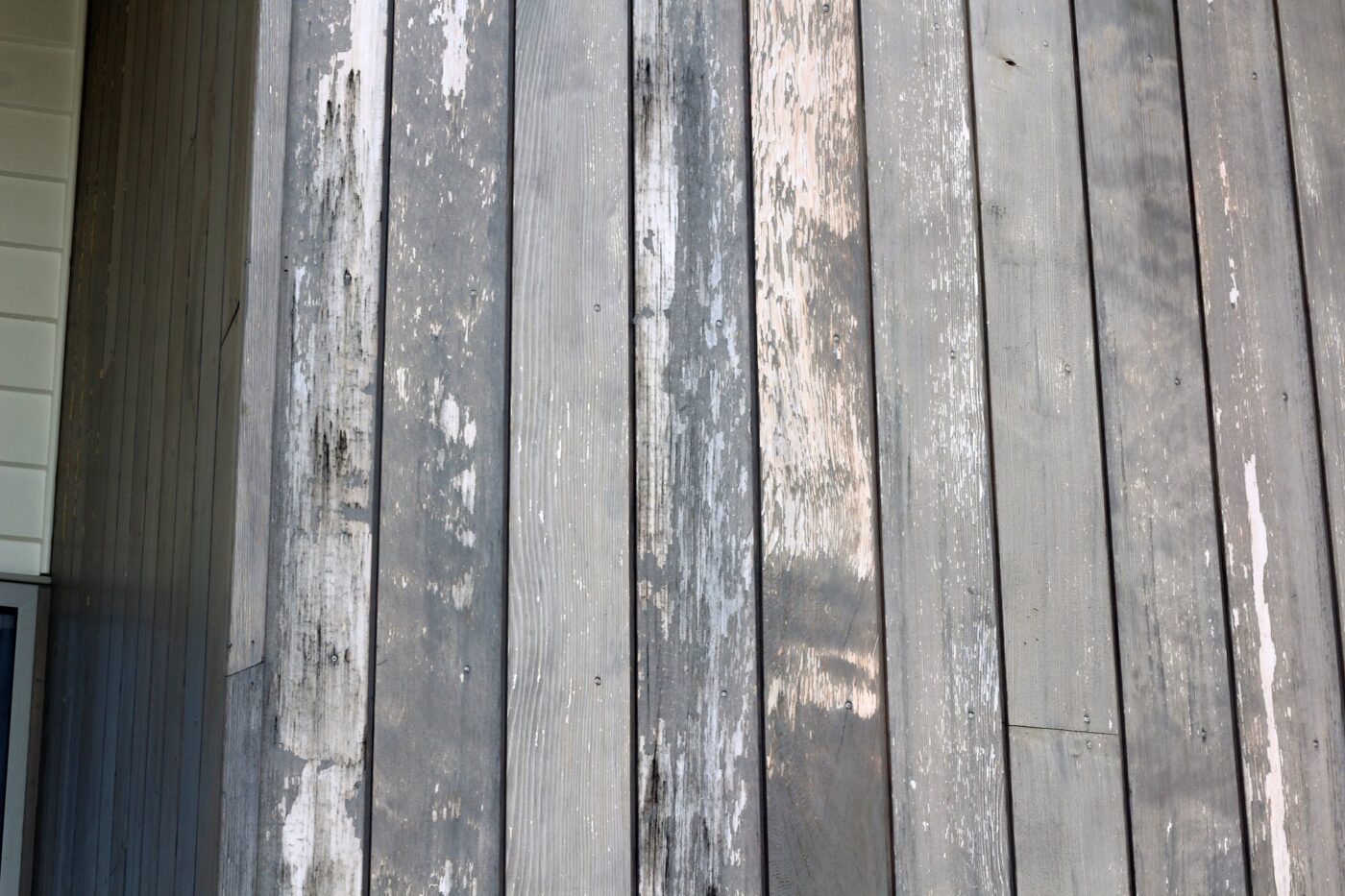
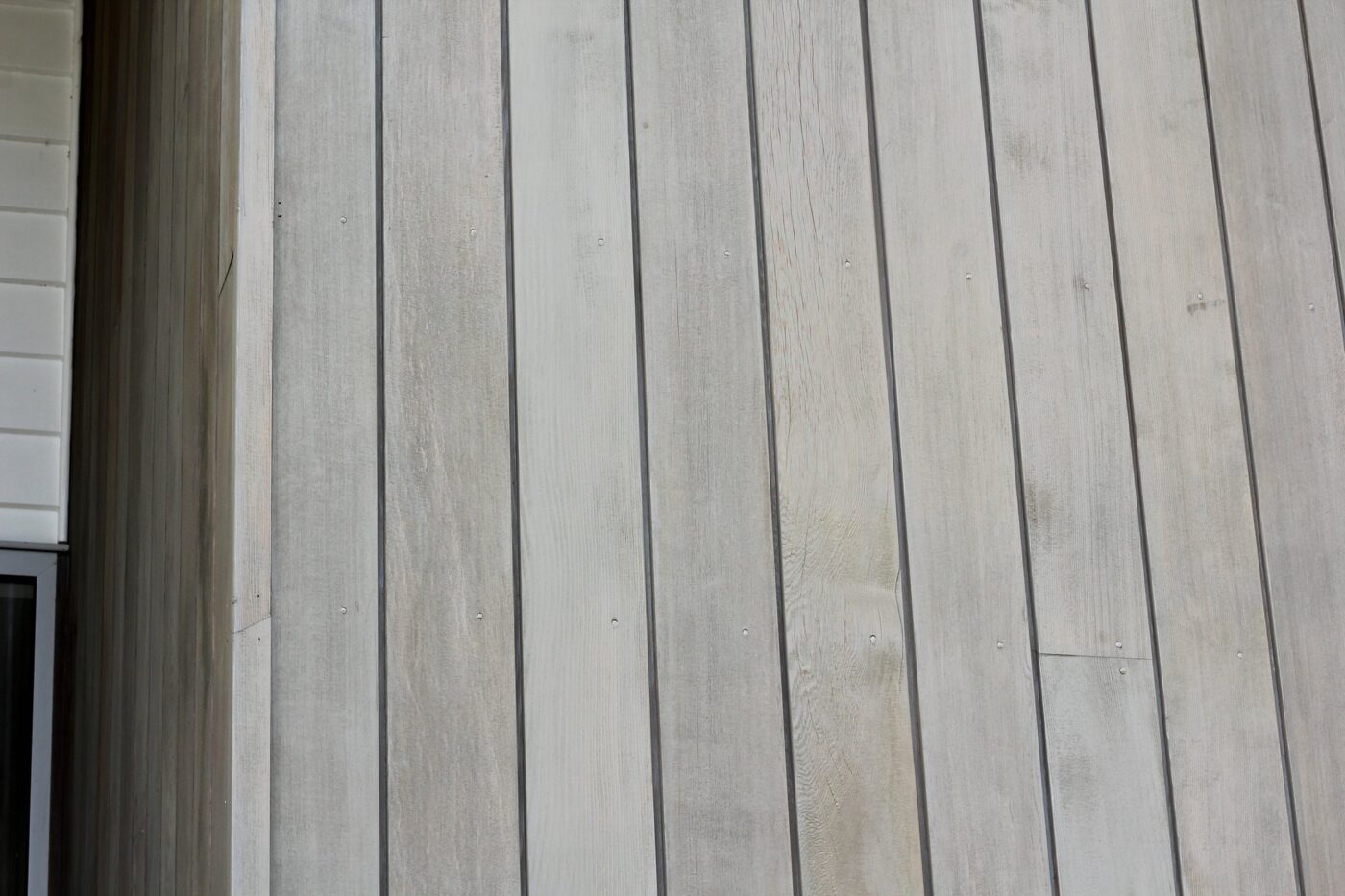
When it comes to Cedar maintenance, there is one golden rule: the best time to protect your timber is always right now. Waiting for the “perfect” summer season to address dry, fading, or silvering Cedar simply leaves your home exposed to harsh winter moisture for longer than necessary.

Our specialist teams work successfully all year round. Equipped with technical expertise, moisture meters, flexible scheduling, and high-performance penetrating oils like Wood-X, we know exactly how to safely restore and protect your Cedar in any season.

Don’t let seasonal myths leave your home unprotected!

Does Your Cedar Need Help?

Our Free Cedar Assessment will assess the health of your timber and give expert advise on how to keep it looking beautiful for years to come.

Cedar stain to oil after

Read More Articles

4 Jul 2025
Yes, Auckland is a rainy place! But we've been looking after Cedar for 12 months of the year, for over 30 years, and rain isn't as big of a problem as you might think. This comes down to the unique properties of Cedar and how we care for it. But unlike paint, oil and stain do not need to cure and dry. Literally minutes after you put the coating on, it's already protecting the boards against moisture. If the boards are dry, we can coat them. Once we get to the point where the boards are wet and will not dry, we stop. Simple as that.

One of the most common questions we get asked is “Can I get my Cedar maintained in the winter?”

Absolutely! With winter, comes rain…but not as much as you might think.

At the height of the wet season, there are 19.1 rainy days in June and 20 in August. In summer, there are 14.1 rainy days in December and 9.8 days in February. That’s only 6-10 days difference.

Yes, Auckland is a rainy place! But we’ve been looking after Cedar for 12 months of the year, for over 30 years, and rain isn’t as big of a problem as you might think.

This comes down to the unique properties of Cedar and how we care for it.

Oil and Stain Are Not Paint

The statement above may seem obvious, but the idea of paint drying is so fixed in our collective minds that people often make the comparison.

Aside from both being applied to walls, they couldn’t be more different products.

Paint is applied by building a film on the surface of another film, which then must dry and cure.

Stain and oil penetrate into the pores of the Cedar and start providing protection against moisture almost immediately.

You could even spray the boards lightly with a hose 20-30 minutes after application and it would make no difference to the finish.

How Wet is Wet?

Similarly, in most people’s minds, when a board gets wet, it is wet the whole way through. This is only what our eyes are telling us.

In truth, it’s only the surface that gets wet (usually the top 1mm), the rest of the board stays perfectly dry.

To apply a Cedar coating, we only need the surface of the board to dry out. Depending on exposure to the sun, wind and air temperature, this can happen anywhere between 5 – 30 minutes.

You can feel whether Cedar it is dry or not by touching the boards. If the surface is too wet, we simply do not apply the coating.

Mark likes to use the analogy of hanging out washing. If you are happy to put out your washing to dry, you can coat Cedar.

And if a spattering of rain does get onto the surface, the oil or stain is already working to create a barrier against moisture.

What Happens if it Does Rain?

Every morning, the Senior Technicians assigned to the job will look at the weather and work with the Production Manager to make the call. In most cases, the decision has been made the previous day.

Our scheduling team also looks at the weather in advance and plans accordingly. If rainy weather is on the way, they will book in other work such as washing or adapt the scheduled work to the conditions.

If the weather is inclement, the technicians can focus on areas of the house away from the wind and rain.

If the weather is coming from the north, we can coat the areas on the south, or undercover areas.

If rain is truly setting in, we can wash the Cedar in preparation for coating. During periods of persistent rain, there can be a gap of 1-2 weeks between washing and coating, but this could be left up to 6 weeks without any issues.

So, When is the Best Time to Coat?

The answer is always now. If you ask us in 6 weeks or 6 months, the answer will be the same.

We are battling the sun here, and the sun always wins. New Zealand’s harsh UV rays are constantly sucking the natural tannins from the boards and they need to be coated to protect against the wet-dry-wet effect.

If left longer than the recommended 2-3 summers, the surface can begin to roughen and create a toe-hold for mould and lichen, resulting in an unkempt look.

This isn’t scaremongering. If you leave them for another 6 months, the difference is almost indiscernible. But that doesn’t change the fact that there is no “best time” for Cedar maintenance.

The best time is always now. You just need to pick your days.

Final Thoughts

We have been doing this for over 30 years and know our way around a bit of rain.

If the boards are dry, we can coat them. Once we get to the point where the boards are wet and will not dry, we stop. Simple as that.

Don’t let the idea of rain put you off getting your Cedar maintained and protected. Winter is just as good as summer, and autumn is just as good as spring. The sun never stops and neither do we!

13 Mar 2025
Looking after Cedar is often a lot more cost-effective than people assume, and that cost just goes down with regular maintenance.

Time to answer the million-dollar question: how much does it cost to maintain or restore a Cedar home?

Thankfully, the answer is nowhere close to a million dollars! Looking after Cedar is often a lot more cost-effective than people assume, and that cost just goes down with regular maintenance.

Naturally, all homes are different, and no single price will fit the huge variety of Cedar homes across the country. The prices given here are a range, based on Mark’s experience looking after Cedar homes for 30+ years.

To cover the widest range of homes, we have categorised the pricing under 3 different eras, with some variables at the end.

Late 80s to late 90s

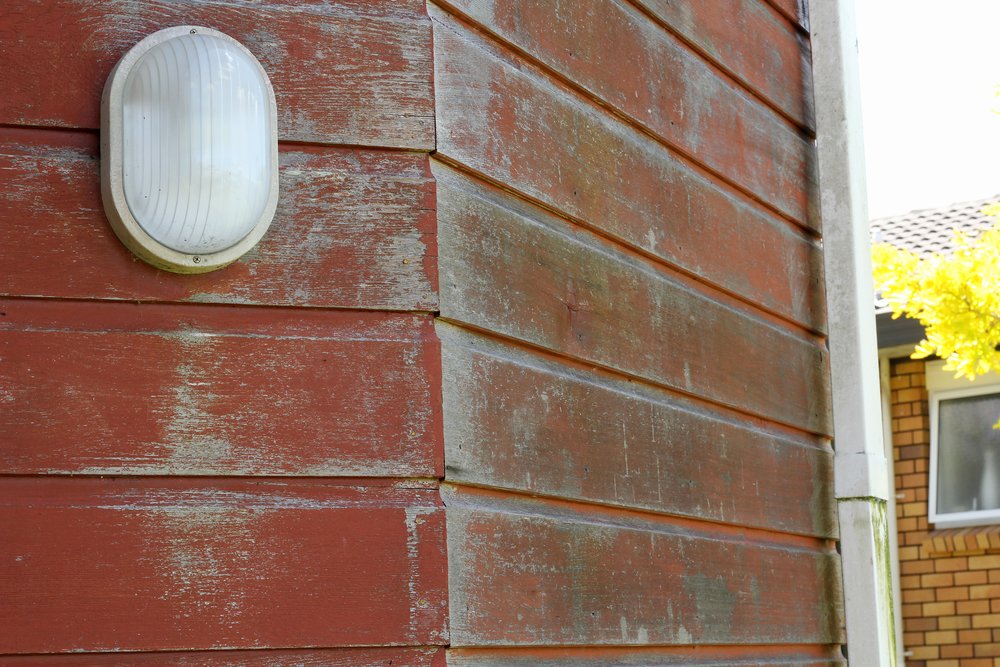
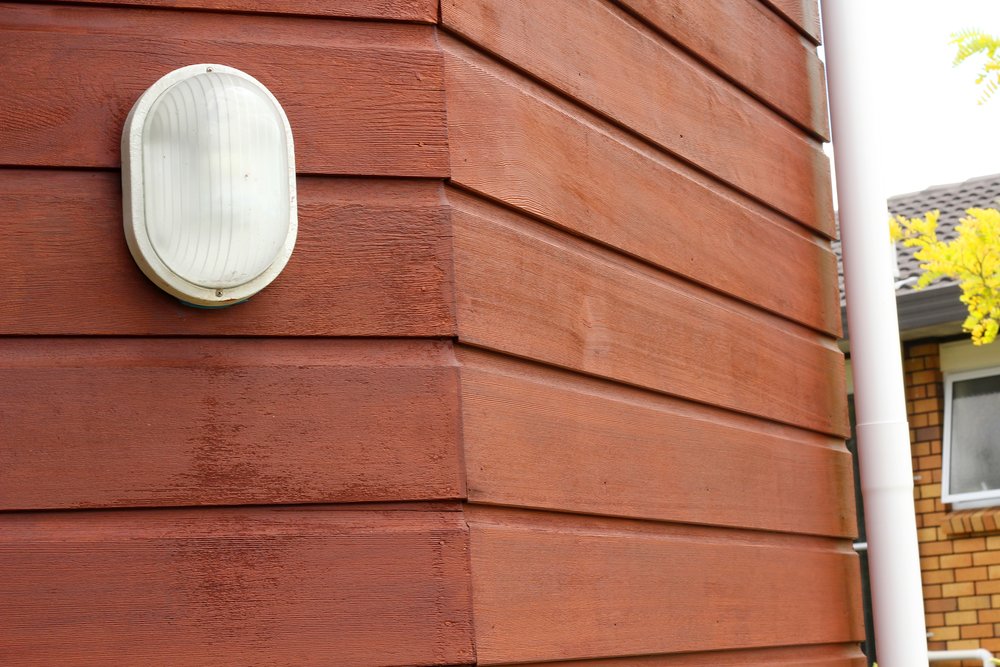
Cedar homes from this era are stained in a distinctive shade of reddish brown. There were only two types of stains available, and they were both brown.

To change the colour of the boards will be very costly, as you would need to strip off the stain before applying a new stain or oil. Most people go for a light rinse and a recoat using one of the new waterborne stains.

The boards themselves are often still in great condition. The Cedar from this era was milled from slow growing trees, making the boards denser and more stable.

cedar-restoration-before cedar-restoration-after

Cedar homeowners were also more likely to maintain the Cedar themselves, so the Cedar often has multiple coats of stain that further protect the boards from harmful UV rays.

Standard maintenance, or a combination of maintenance and restoration, will cost between $5.5k – $8.5k for a single-story home, and $8.5k – $10k for a double-story home.

Early 2000s to 2010

Cedar homes from the early 2000s often used Cedar as a feature, installed up high, to enhance the look of weatherboard and solid plaster houses. There are very few houses from this era that are clad entirely from Cedar.

20 years on, most of these houses have had nothing done to them. The culture of maintaining your own Cedar has diminished due to busier lifestyles and more focus on health and safety, resulting in Cedar on sun exposed faces looking shabby and tired.

This scenario usually requires restoration over maintenance. Restoration involves washing the house, removing any organic matter, stripping back any old stain, and then applying a new coat of oil.

The cost of restoration will depend on volume and aspect: how much Cedar was used as a feature and which direction it faces. If it’s northerly facing, you will need to do considerable restoration work. If you have a feature on the south face, it might still be in good condition and only require recoating every 10 years.

If the Cedar can be accessed by ladder or mobile scaffolding, the standard cost of a restoration is between $3.5 – $5.5k. Fixed scaffolding will add considerably more to the cost.

2010 – Present

Since 2010 onwards, Cedar has only grown in popularity. Homes are trending away from brick and tile, towards new townhouse developments, or architecturally designed properties.

Cedar is still a premium building material, but the price has come down in recent years due to faster growing methods and better exchange rates. As a result, we are back to building whole homes in Cedar.

The downside is that the faster growing timber isn’t as dense as the old boards. It’s still an incredibly robust cladding but requires regular maintenance to keep stable. If neglected, the boards will start to cup, and at some point, begin to pull the fixings through the timber.

Single-story Cedar homes cost $6.5k on average for a wash and recoat. Double-story Cedar homes are upwards of $8k – $10k. Large architectural homes are $15k – $20k.

Pricing Variables

  • Fixed scaffolding

Where possible we work from our own mobile scaffold towers and extension ladders, which are safe and fast, and keep costs down. Fixed scaffolding is often required when you go from 2 to 3 stories.

Scaffolding a large house will cost an additional $7.5 to $10k home. Scaffolding a smaller home, but still 2 story with high areas, will be $4k-$5k.

  • Access issues

These are houses that are built on steep hillsides or have very high walls. There will always be additional costs when our team must access hard to reach areas, but it’s not often a huge expense. The areas that need rope and harness are usually limited, and it’s all part and parcel of what we do.

  • Size of the house

The bigger the house, the more time, stain and oil it requires.

Additional stories on top of that will always be more expensive, and when you go from 2 to 3 stories scaffolding is required. If you have 2 stories, but there is very little up top, the extra cost will be minimal.

  • Time passed

If you haven’t maintained your Cedar in the last 3-5 years, it’s going to be very dry and require a lot of product.

  • Restoration vs Maintenance.

If the Cedar has never been touched, the boards will require a deep clean and oil. If they have stain, we need to strip back the broken-down stain. These are two very different treatments, with different costs associated.

Final Thoughts

No two houses are the same. There is a good reason why our team travel out to every house before we send a quote. There are a lot of variables in pricing a quote (and many of them can work in your favour!), so it’s always best to call our team for an onsite assessment.

We never push Cedar maintenance if it’s not needed and prefer to look after the best interests of our customers over the lifecycle of their homes.

15 Dec 2024
Applying the right amount of oil is essential in protecting your Cedar from the harsh New Zealand sun. For stress free Cedar maintenance, simply follow the manufacturer's guidelines and your boards will last forever (well, almost).

Applying the right amount of oil is essential in protecting your Cedar from the harsh New Zealand sun.

The purpose of applying oil is to seal the boards from moisture. And the only way you can seal the boards is to put enough oil into the deep pockets of the timber that the water will stop getting in.

If the pores of the timber are not filled with oil, they will accept whatever other liquid there is available, such as the rain or moisture in the air. This causes the boards to swell and contract, absorbing and releasing moisture.

The summer heat will then dry the surface of the timber and as the surface tension gets tighter, the boards will begin to cup.

Follow the Manufacturers Guidelines

For the purposes of this article, we will look at the manufacturer’s guidelines for Wood-X.

Coverage of Wood-X penetrating wood oils is dependent on surface condition, timber type, air temperature and other factors. The following is an approximate, typical guide.

Wood X Guidelines

The range of sq meters per litre (such as 9-14 sq meters for the first coat of dressed timber) is a guideline for different situations. There will be areas where the boards will allow you to put the maximum recommendations on, and areas where you will only get the minimum.

The end grain of the Cedar is nice and open and will suck up the oil, whereas the heart of the tree is a lot harder and does not absorb the oil as easily.

Other factors include the porosity of the board, how warm it is (in warm temperatures the boards will expand and oil will penetrate more easily), and the type of timber also makes a difference.

A dressed faced board has a smooth finish, like trying to get oil to penetrate glass, so it takes a long time for the oil to soak in. With a band sawn finish or weathered finish, the pores are open and will accept oil more readily and get deeper into the timber.

Is More Oil Always Better?

More is best. You can’t put too much Wood-X on. The intention is to saturate the surface and put as much oil into the timber as you can.

The timber will tell you when it’s full. It says that by perspiring. It leaves a shiny film on the surface and at that point, you know that no more oil is going in.

Sometimes people try and apply stains or oils sparingly and get them to look pretty with the first application. That’s not the design of a penetrating oil such as Wood-X. Wood-X needs to be applied so the boards get saturated and no longer absorb oil. At that point, you stop.

3-5 sq meters per litre is not a lot of timber to cover with quite a lot of oil, but that is what’s required if you want the boards to be protected.

Does Recoated Cedar Have Different Requirements?

No, the same principles apply. Saturate the surface and put as much oil into the timber as you can.

For new Cedar, the first recoat timing starts when the boards are installed and exposed to the air trafficking around the outside of the board. On a dressed face, the small pockets have already been filled with oil, so you are going to get 12-15 sq meters per litre.

That first coat can feel like it’s a waste of time. It’s not, it’s just very labour intensive for not a lot of gain, but it will set you up for the future of your timber.

Application Tips

  • Be careful to protect the areas you don’t want oil on. It migrates very quickly and will get onto decking and painted weatherboards. Once soaked in, oil is difficult to get out.
  • Using a spray gun is fast and effective, but we recommend using a brush or speed brush to take off any excess oil before it drips.
  • Spend the time to get the colour right. Choose a colour you like and stay lighter, that way the 2nd coat can go darker. It’s hard to go the other way around.
  • How long until the oil is dry to touch? If it’s a warm and windy day, around 48 hours after coating. With harder woods, or in cold conditions, you may need to extend that to 72 – 96 hours. As long as it takes to soak in.
  • When you start to see the colour fade, that’s an indicator that your Cedar needs attention. Or when the rain comes and the boards go very dark because they have soaked up the water. Both are tell-tale signs that there is no oil in the pores of the timber.

Final Thoughts

Wood-X is tried and tested in New Zealand conditions. For stress free Cedar maintenance, simply follow the manufacturer’s guidelines and your boards will last forever (well, almost).

If you need further advice, do not hesitate to get in touch with our team. We are always happy to help!

Read More Articles

Showing 1 - 10 of 18

Subscribe

Sign up to our quarterly newsletter for all the latest Cedar tips and expert advice.