
New Owners, New Cedar: A Gulf Harbour Restoration

New Owners, New Cedar: A Gulf Harbour Restoration

Matakatia feature image 1000x667

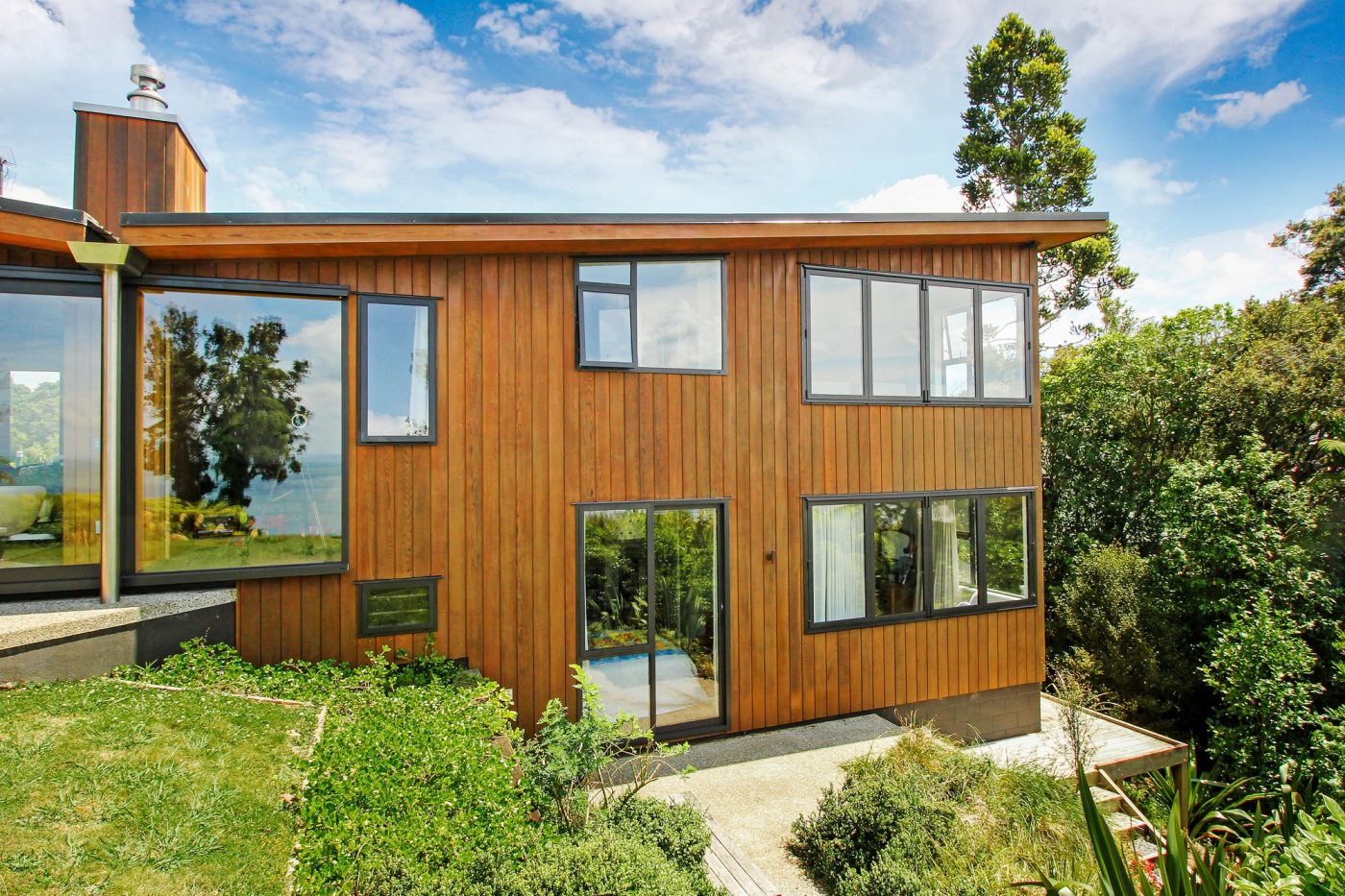
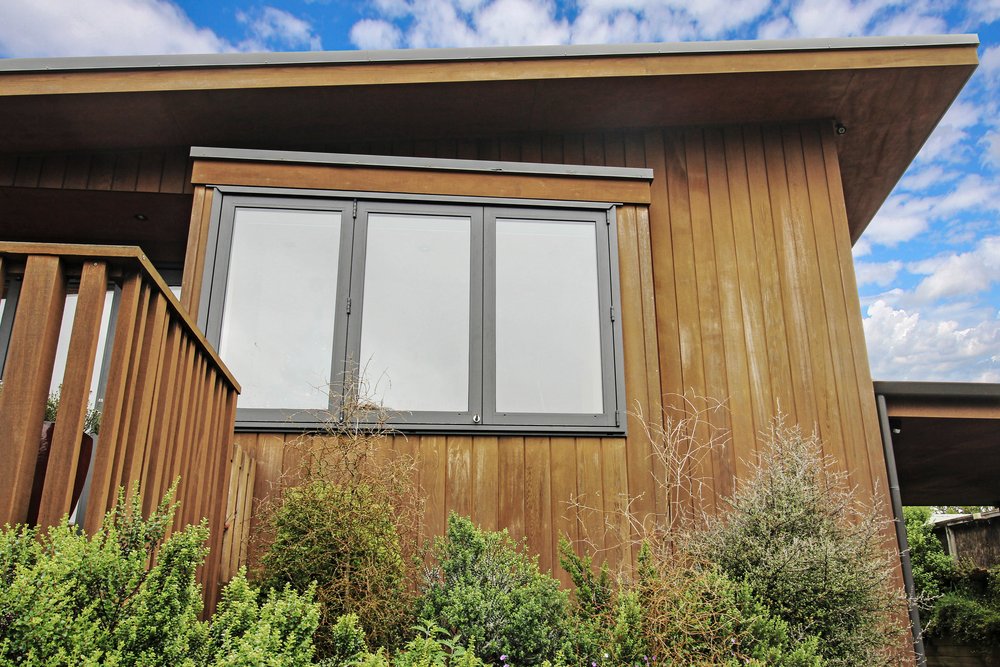
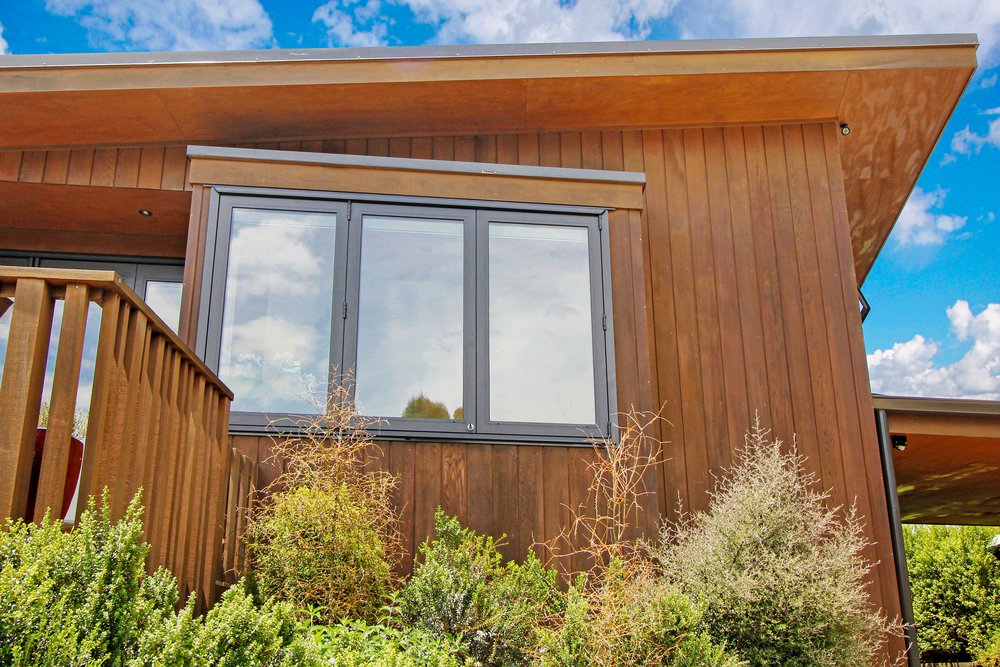
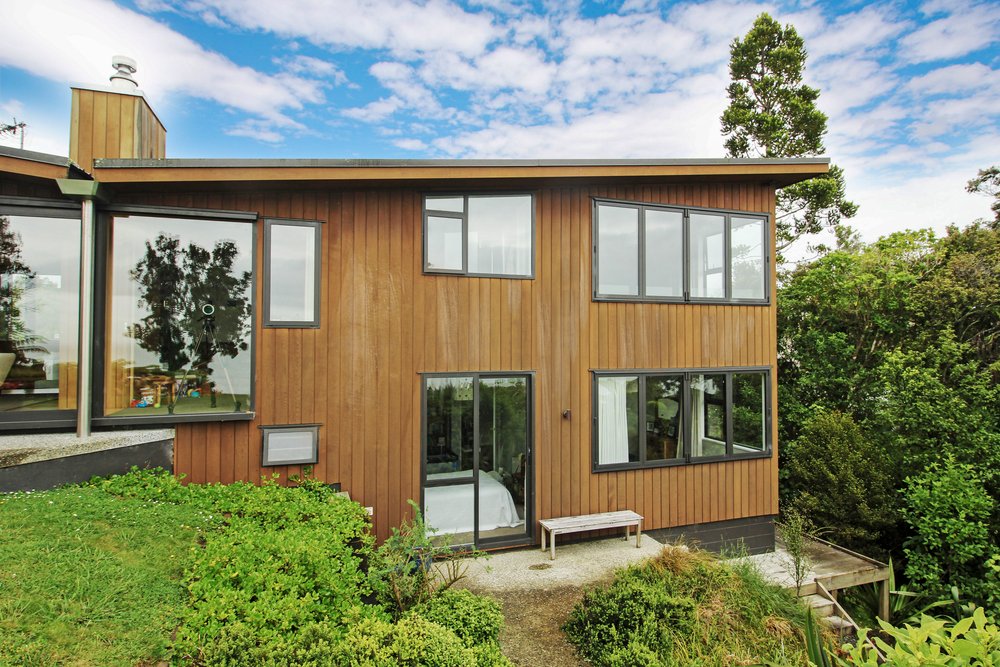
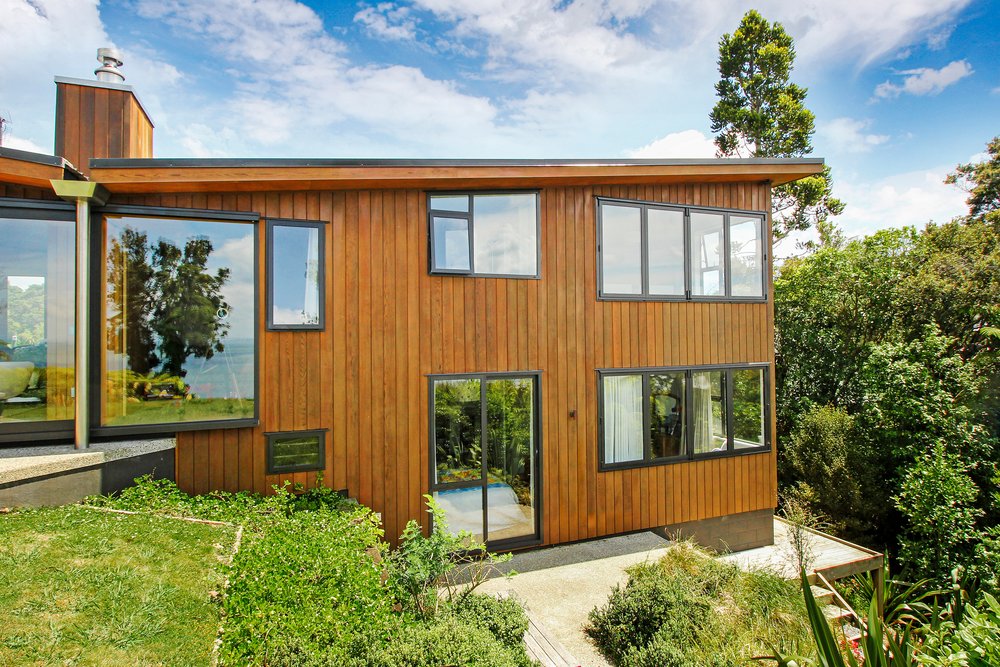
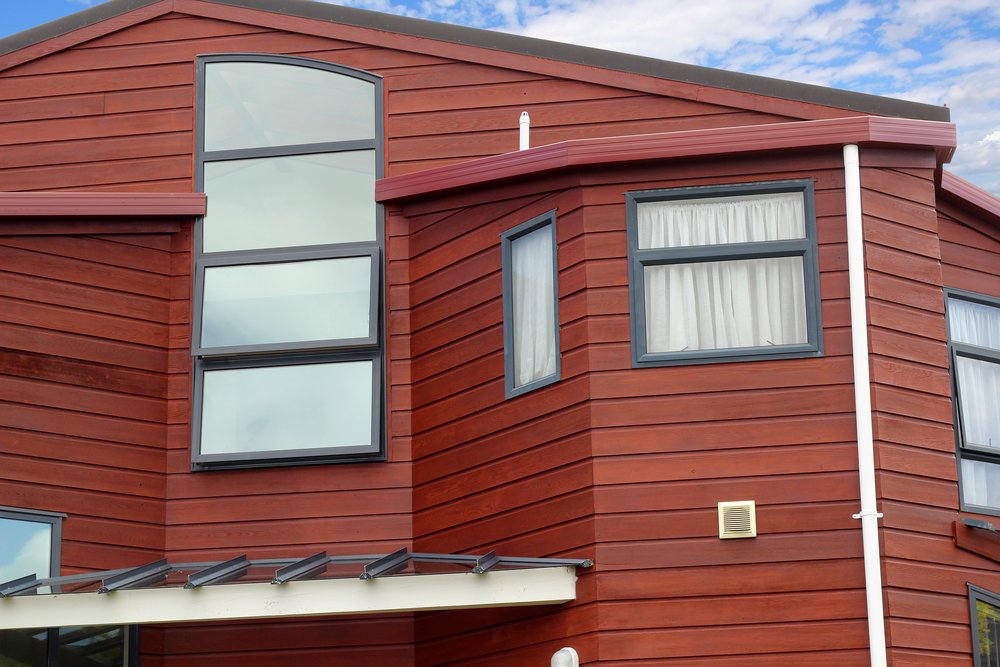
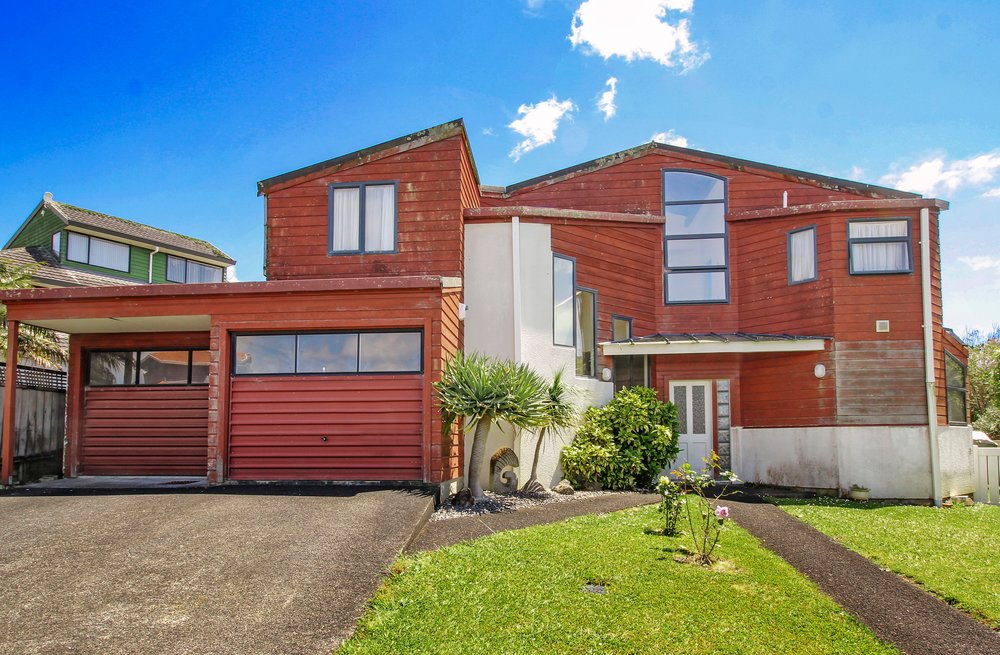
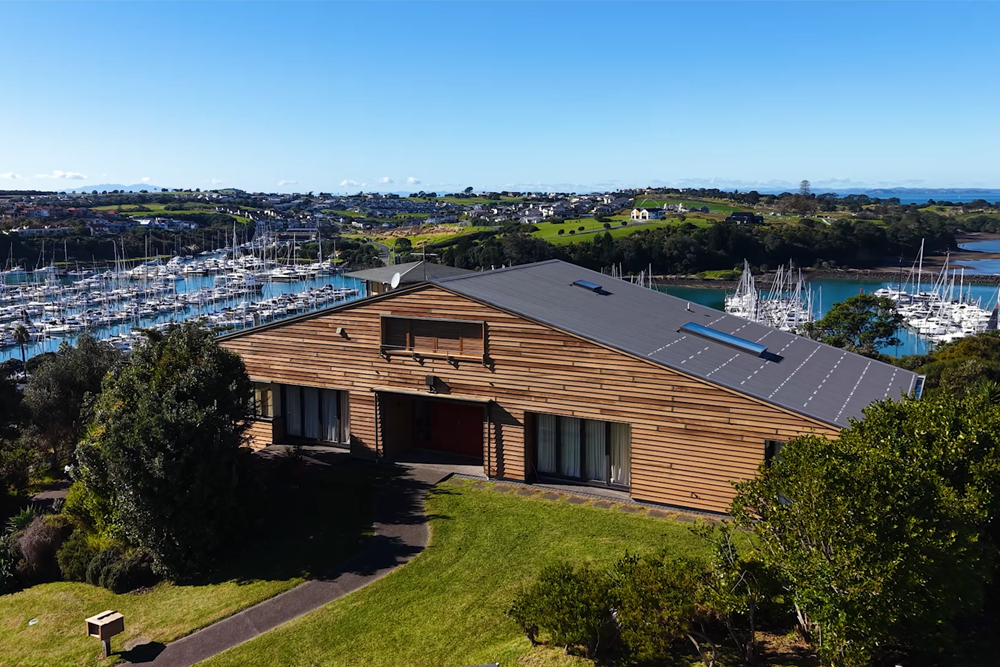
This architecturally designed home sits high above Gulf Harbour Marina, positioned to make the most of the water views below. The Cedar cladding wraps around three storeys on the north face, stepping down to a single storey on the more sheltered south side. 

The new owners had bought the property only a year or so before contacting us, with restoring the Cedar always part of the plan. They weren’t sure if the timber could be saved or if it would need replacing altogether, so they wanted to speak with people who knew Cedar before deciding either way.  

We were happy to have that conversation, and even happier with what we found. 

Maintenance Timeline

TimberTech was first contacted on the 3rd of October, 2025.  

  • 6th October, 2025 – Cedar Assessment completed. 
  • 7th October, 2025 – Quote sent. 
  • 2nd December, 2025 – Job started.  
  • 22nd December, 2025 – Job completed. 

The job took roughly three weeks from start to finish, with delays caused by rain and by the access equipment being unusable in high wind. 

Cedar Assessment

The Cedar hadn’t been treated for at least ten years. It had likely been oiled at some point in the past, but there was no evidence of stain having ever been used, no patchiness or uneven colour of the kind you’d expect to see in sheltered areas if a stain had broken down. 

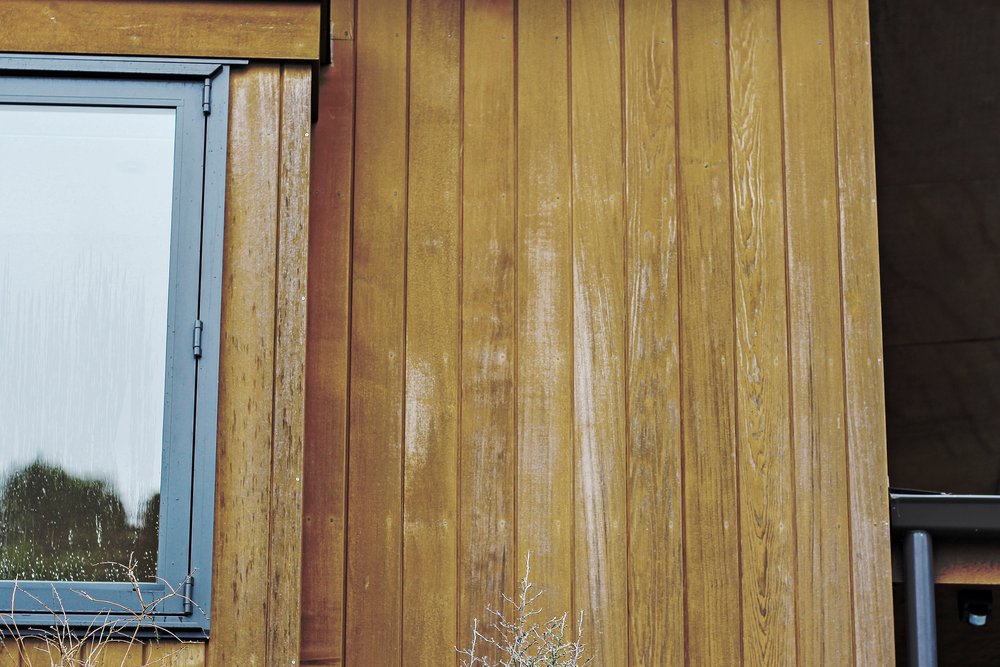
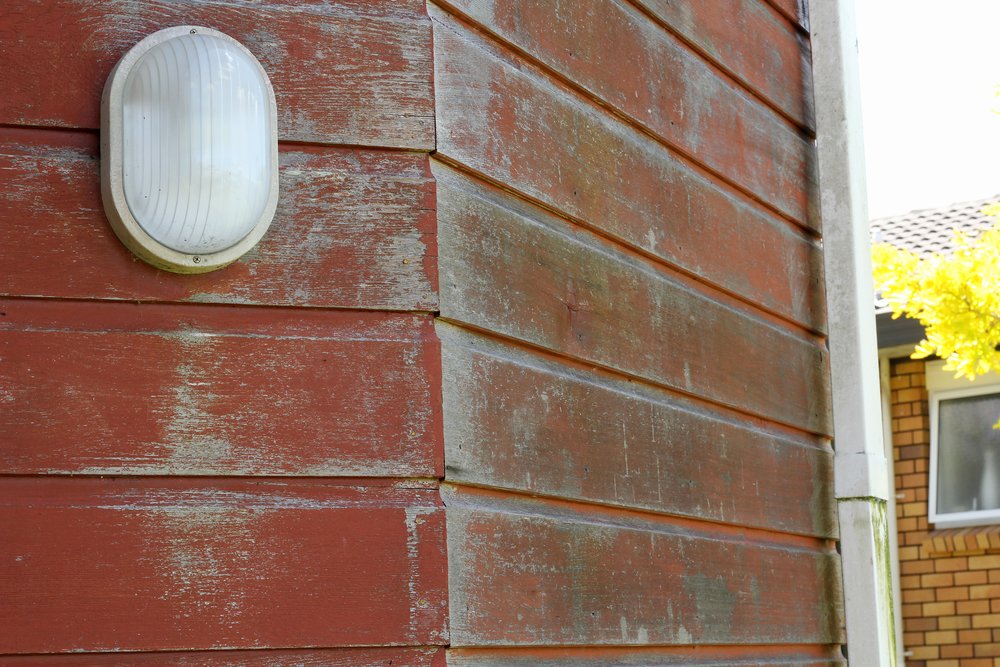
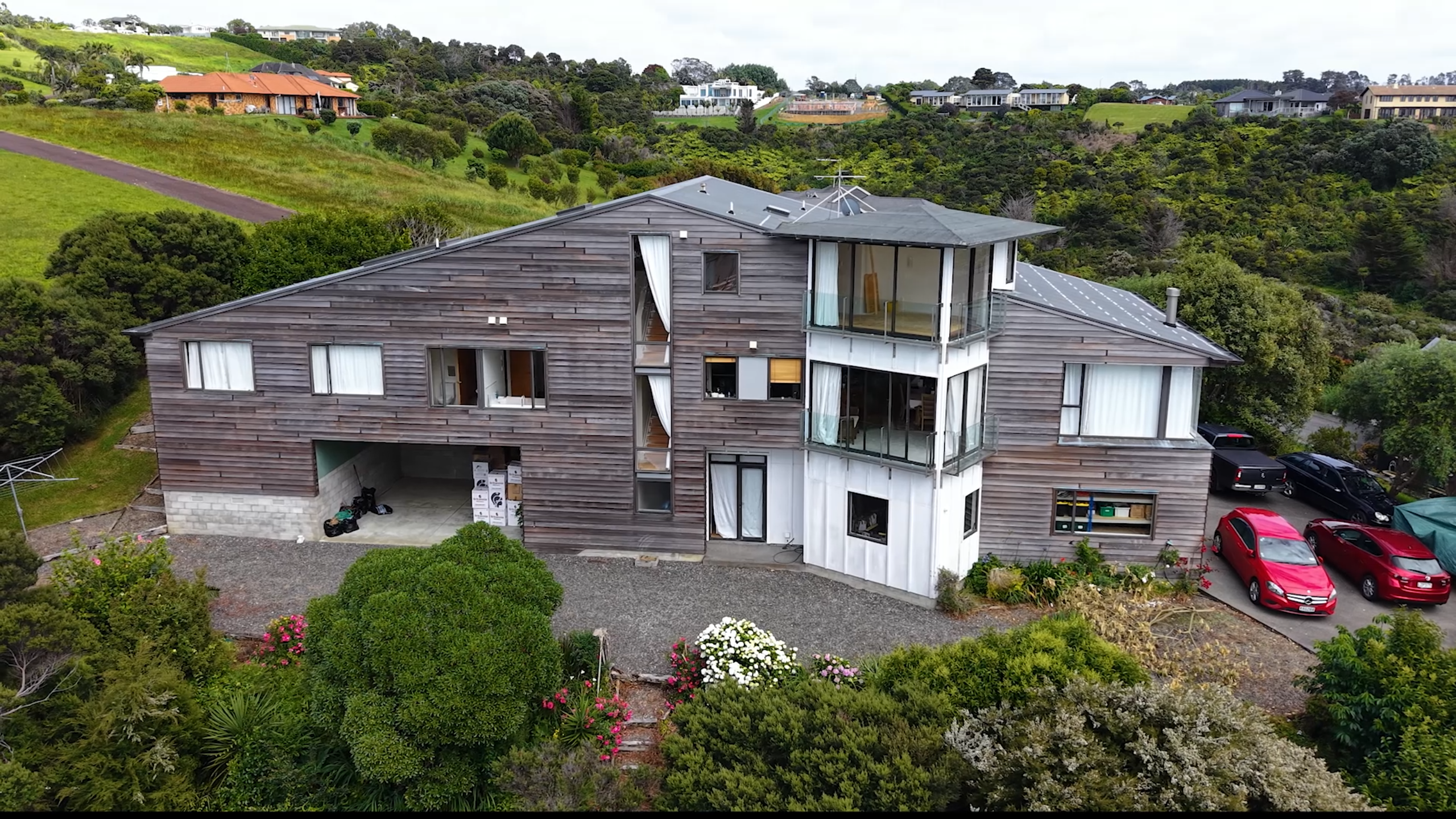
By the time we arrived, the boards were grey, silvered and very dry, particularly on the exposed faces. There was some minor cupping starting to show, though nothing at an advanced stage yet. 
silvered-cedar-boards

The good news was the quality of the timber itself. These were thick boards with very few knots, a good grade of Cedar that holds up well even after years without maintenance. 

The north face had taken the worst of it, closely followed by the west. The east side was dry and clearly needed treatment, but hadn’t cupped or ridged the way the north and west had. The south face, the smallest and most sheltered side of the house, was flatter again, though it still needed the same care. 
Given how thirsty the boards were, our recommendation was a deep clean followed by oil, with two coats applied in the same visit. That’s not our usual approach. Normally one application is enough to saturate the boards, but it was obvious early on that this Cedar could take more, so we applied a second coat while the crew was still on site to get as much oil into the timber as possible. 

Cedar Maintenance Process

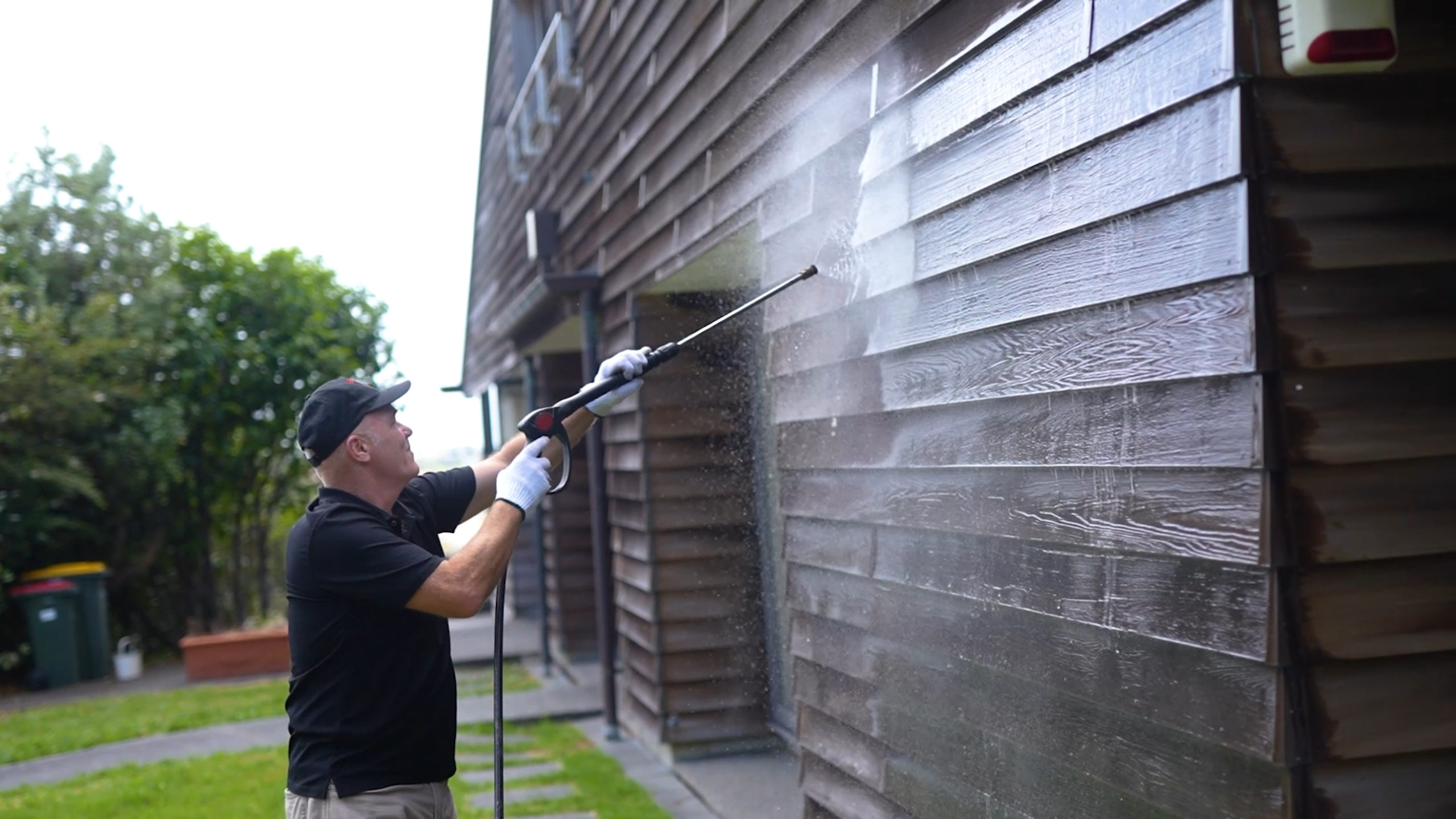
The deep clean followed our standard process: a surfactant applied to lift the built-up organic matter, then we use a waterblaster at low pressure to wash it off without damaging the surface of the boards.
waterblasting-cedar

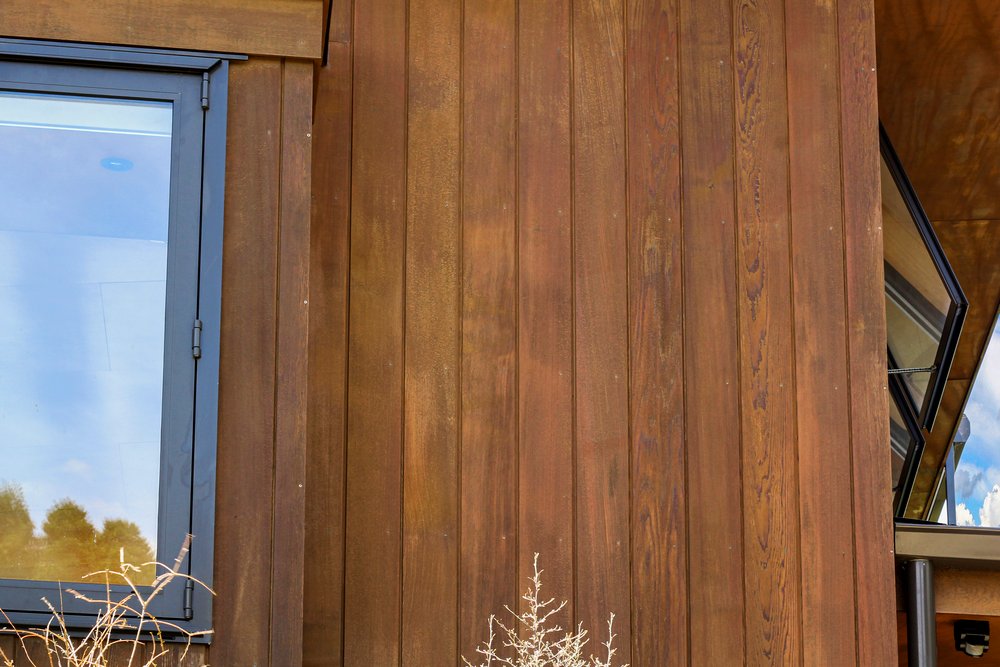
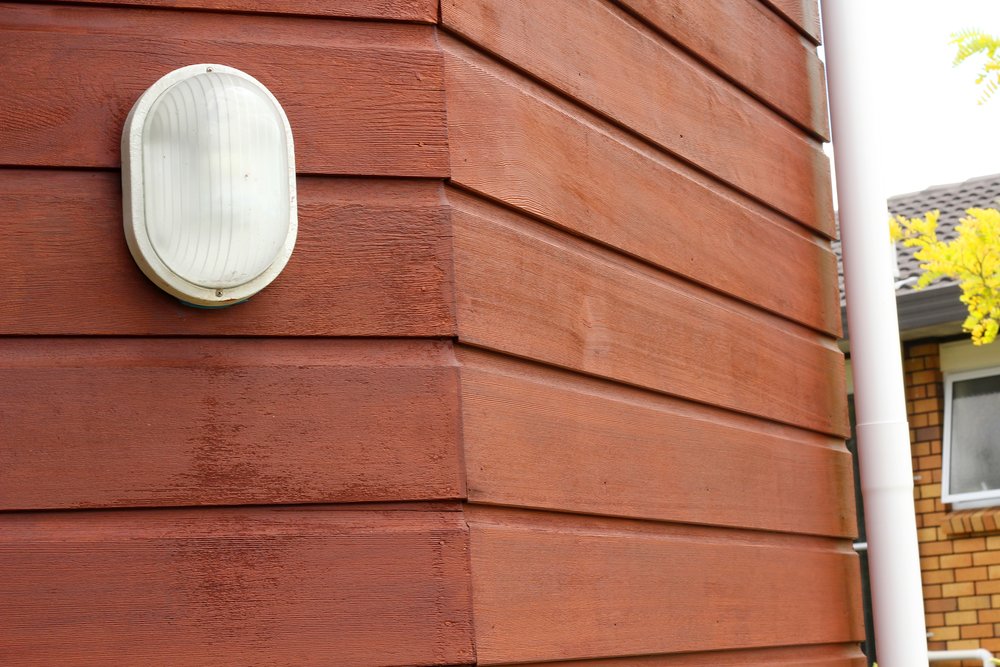
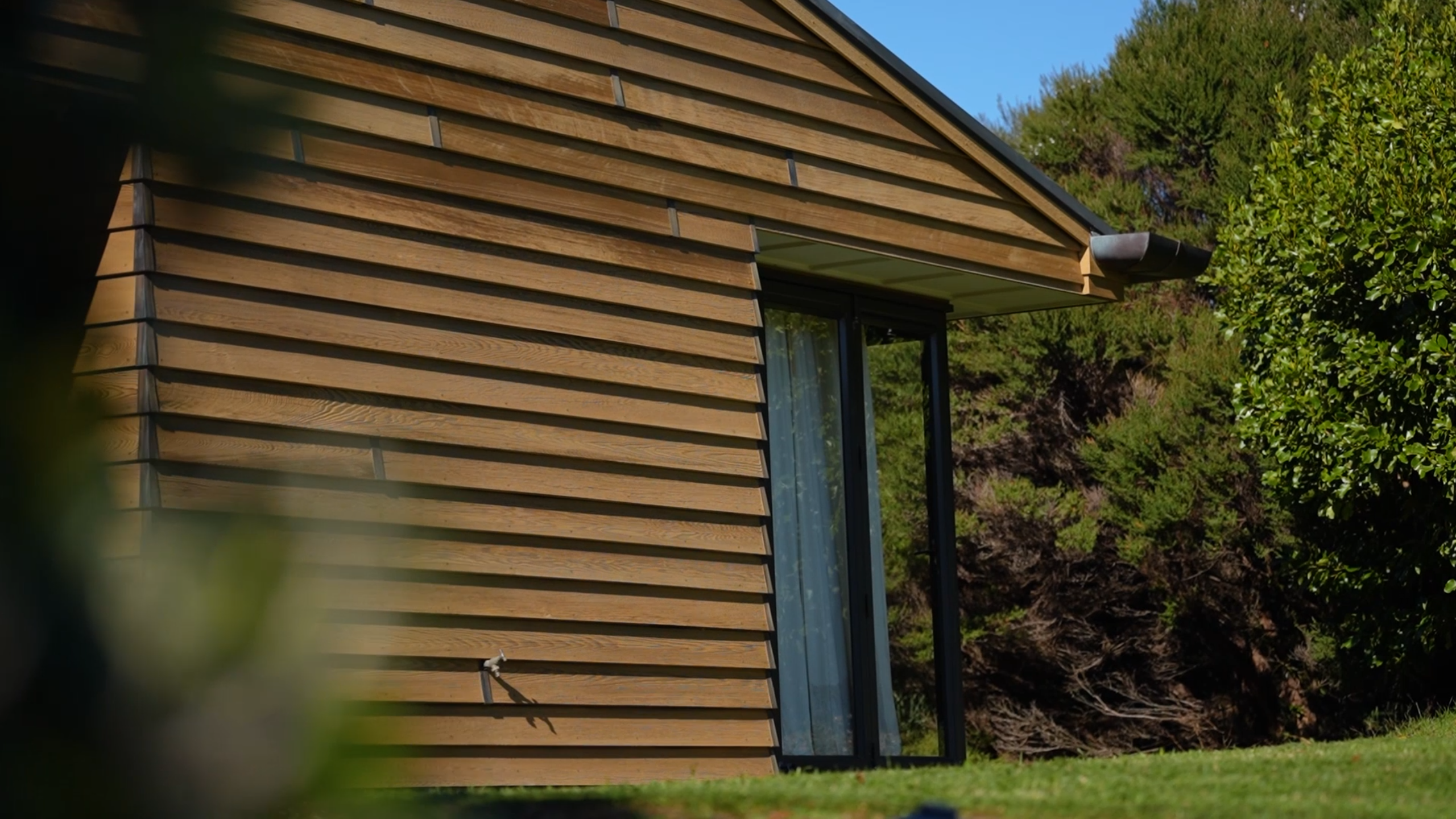
Because the Cedar had never been coloured, this was essentially a blank canvas. We worked with the homeowners to choose a colour that would bring out the timber’s natural tones, landing on Wood-X Mount Honey, one of the closest matches in our range to Cedar’s own colour. It’s a shade we often recommend to homeowners who want their Cedar looking like Cedar, rather than taking on a heavier stained appearance. 
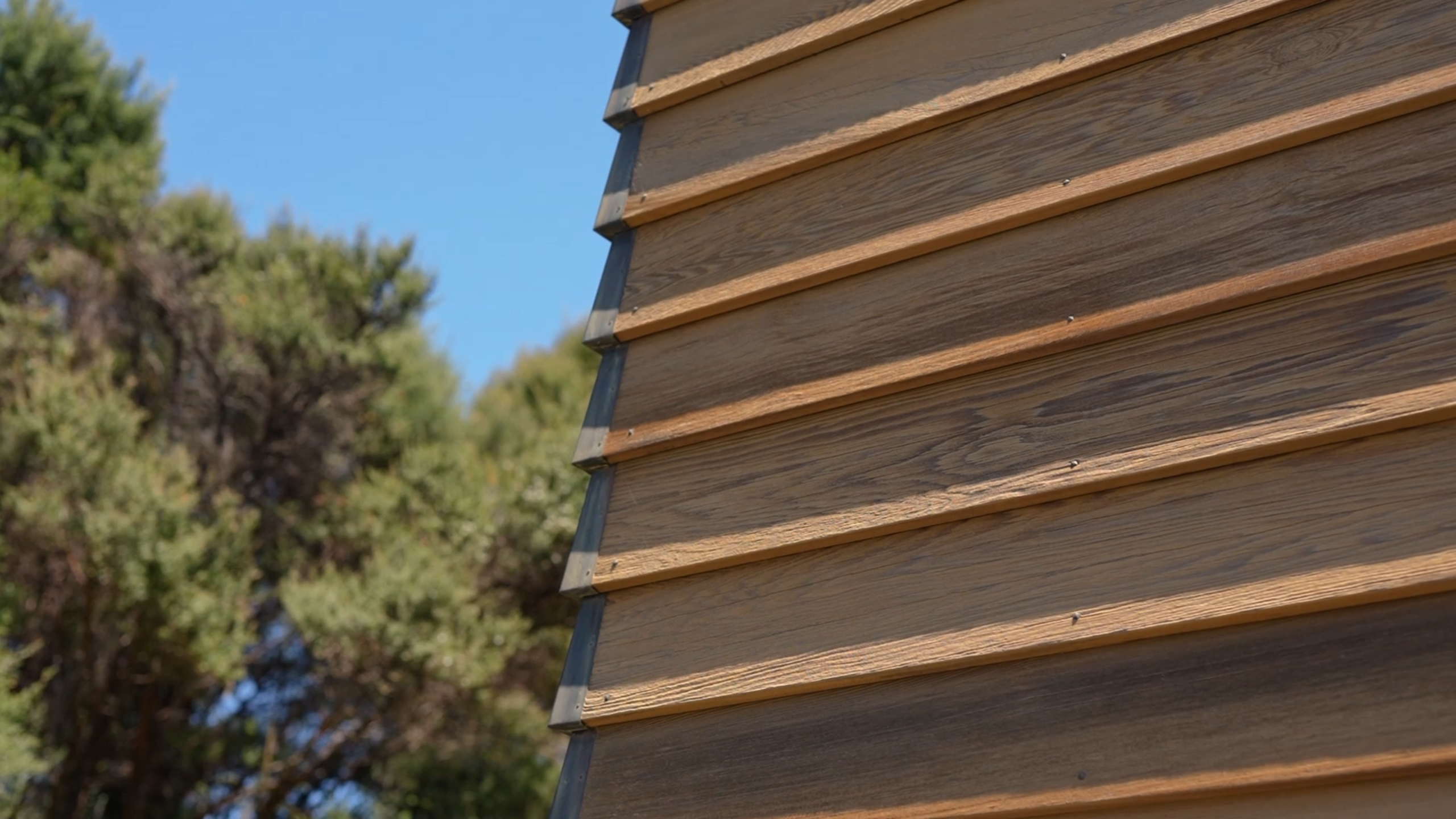
Application was a mix of spray and brush, with the large, flat sections of the house lending themselves well to spraying once conditions allowed. 

cedar-mount-honey

There was also a feature section at the back of the house that had originally been painted white. It stood out more than the owners wanted, so we prepped, sanded and repainted it in a colour that ties in with the surrounding Cedar rather than competing with it. 

Cedar Maintenance Challenges

The biggest challenge on this job was access. Getting a knuckle boom onto the site meant allocating a specially trained technician to operate it, along with a second person on the ground at all times. The boom covered the whole east-facing rear of the house and part of the north face, with a mobile scaffold used to reach other areas, and rope and harness work needed to paint sections of the roofline.
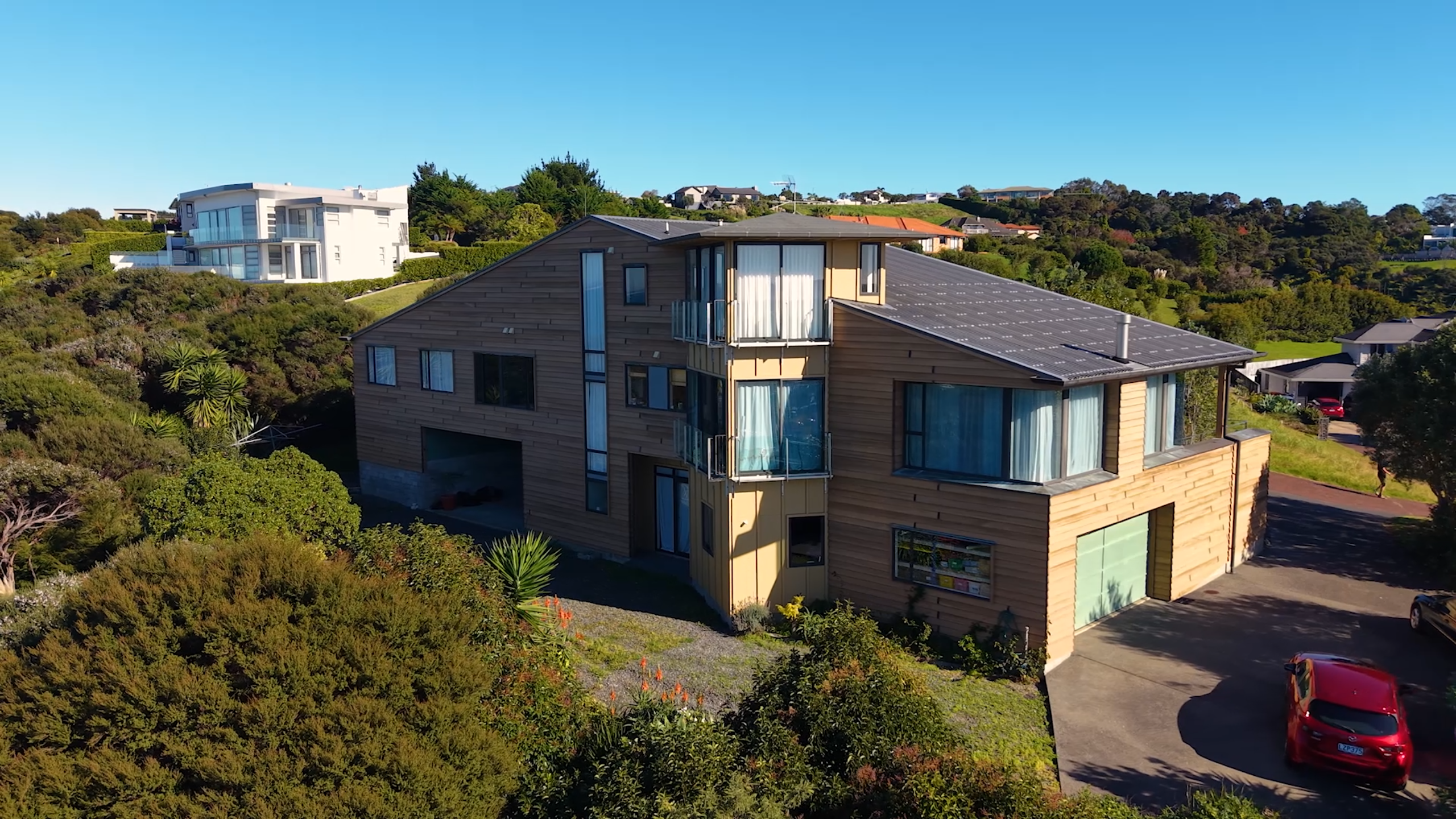
cedar-access

Weather was the other factor. Perched on an exposed hill above the marina, the property catches the wind, which meant timing the more exposed faces carefully around the conditions rather than working straight through. 

Beyond that, this was simply a bigger job than most. The house is larger than many properties we work on, but the process itself, deep clean and oil, didn’t change. We just needed the right number of people on site to get through it in good time. 

Ongoing Maintenance Requirements

We recommended returning within 6 to 9 months to check whether the boards needed more oil. When Cedar has gone untreated for a long time, getting as much oil into it as possible in those early stages extends how long it will last before the next full treatment is due. 

We’ll check all the faces, though it’s the sun-exposed sides that are most likely to need a top-up. If the boards prove to have taken on enough oil, the property will move onto a standard maintenance plan. Rather than the usual 2-3 summer cycle, we like to check back in on properties like this a little more regularly, generally around the 18-month mark, just to make sure everything is holding up as expected. 

The Final Outcome
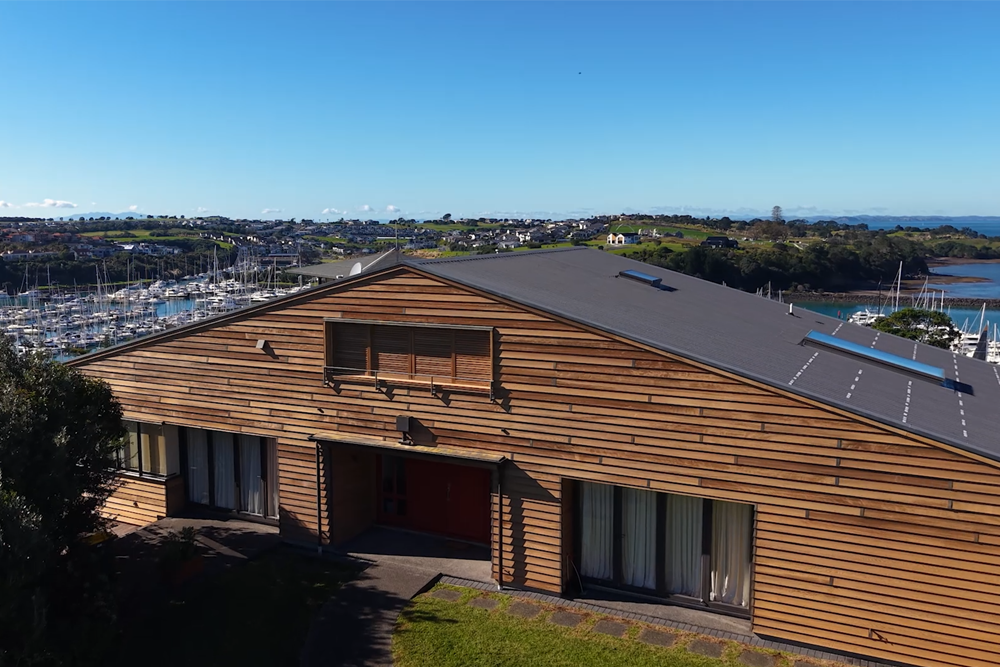
The transformation exceeded the owners’ expectations. Like a lot of our customers, the biggest surprise came after the deep clean, before any oil had even gone on, just seeing how different the timber looked once the decade of grime had been washed away. Once the oil colour was chosen and applied, they were thrilled with the finish.

cedar-mount-honey

Ryan led the job, supported by Emma, who did a substantial amount of the work before going on maternity leave. 

The scale of the transformation, from silvered and weathered to a warm, natural Cedar tone, is exactly why we chose to use this job to show what’s possible when Cedar gets the attention it deserves.
Property Details

Year of Build:
2003
Location:
Matakatia
Coating:
Wood-X Mount Honey

Category:

More Featured Properties

14 Sep 2023

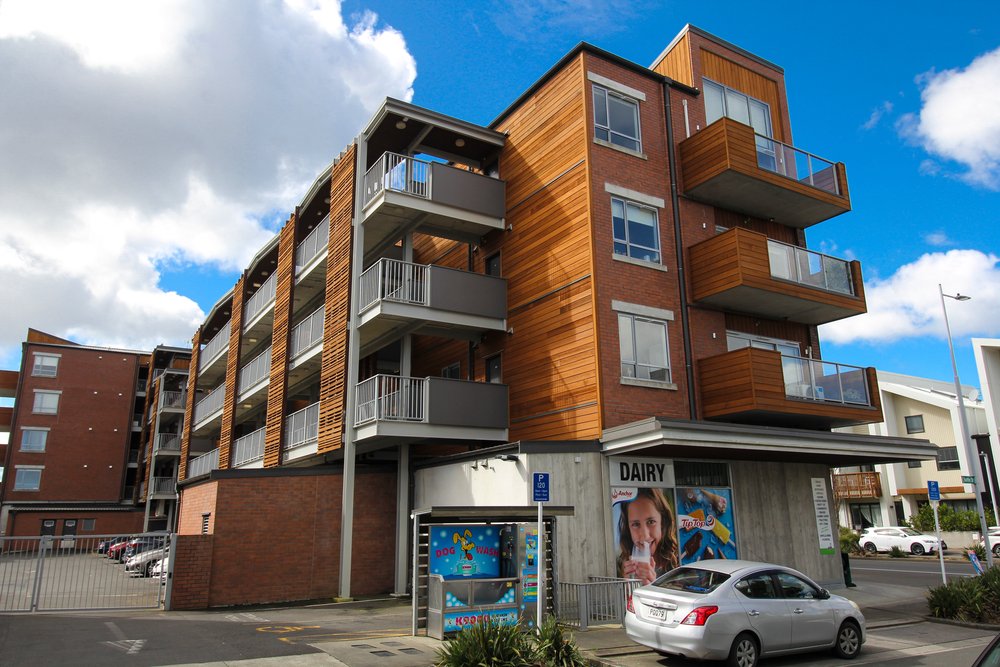
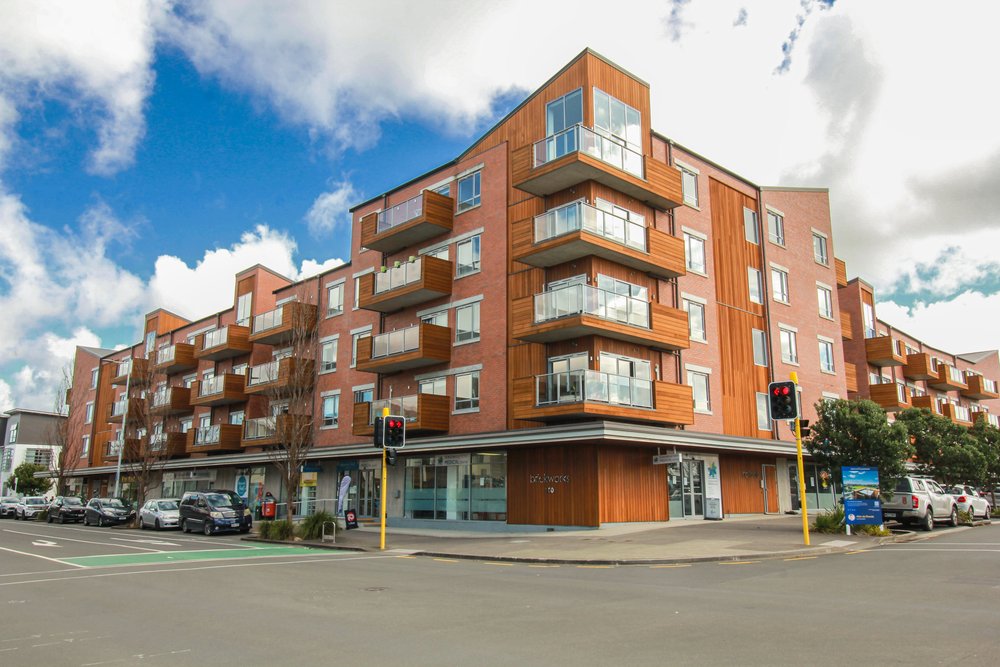
Brickworks is large, mixed-use complex spanning an entire block in Hobsonville. The complex is comprised of 4 buildings situated around a central parking court and rain garden, with 60 residential homes and additional commercial units at the street level.

The mixed-use nature of the development was designed to be the commercial heart of the surrounding suburb and the appearance of the building is integral to its success.

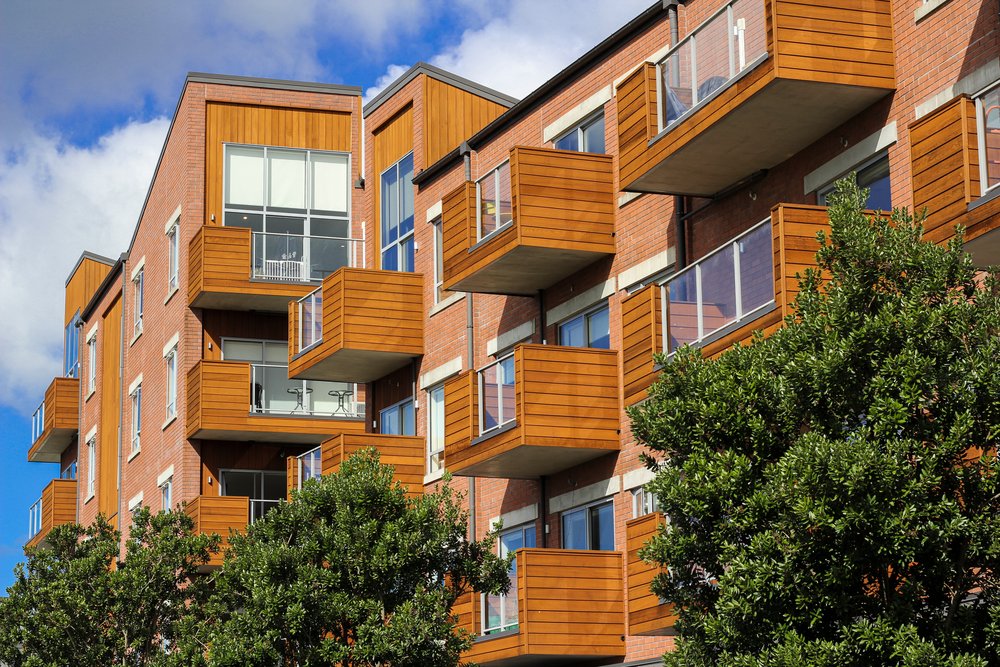
Clad in an eye-catching mix of bricks and Cedar, the aesthetic is based on the industrial buildings that were once present on the site and pay tribute to the rich history of the area.

The building was finished in May of 2015. The original intention for the Cedar was to let it weather naturally and give the building a silvered look.

However, the rates at which the Cedar was silvering were inconsistent depending upon the orientation of the timber and the building was starting to look patchy and uneven, with some watermarks on the surface.

Up until then, the body corporate had been getting the Cedar soft washed every year but were unhappy with the results. To show the difference between a soft wash and a deep clean, we first did a demonstration on an isolated wall.

The initial results were striking and TimberTech was awarded the contract to maintain the building over a 10-year period.

Img 6242 Cc

Maintenance Timeline

The body corporate for Brickworks first approached TimberTech in March of 2020.

  • 2021, August – Deep clean and recoat the entire building.
  • 2022, May – Recoat the sun-exposed dry faces only.
  • 2024, Oct – Soft wash, recoat the sun-exposed northern faces and assess the other faces.

In general, sun-exposed faces should be recoated every 2-3 summers to protect the Cedar against the elements and keep it looking great all year round.

As part of the 10-year maintenance plan, we are scheduled to wash and recoat the entire building in 2026, recoat the sun-exposed dry faces in 2028, then recoat the sun-exposed dry faces and assess the other faces in 2030.

Cedar Maintenance Process

As the original intention had been to let the building silver naturally, the Cedar was in a natural state with no oil or stain.

Upon first inspection, the northern face was dry as a bone. The remaining faces were faring better, but still in need of treatment to protect against future wear and tear.

We started with a deep clean of the entire building to remove the oxidised timber fibres responsible for the Cedars patchy, silvered look. The Oxyclean solution also removes all the dirt, grime and organic matter, restoring the natural timber tones.

IMG_6368_CC

Once clean, the timber was treated with a tinted penetrating oil developed by Wood-X.

As the Cedar had not been treated previously, the initial application of oil was quickly absorbed by the dry timber. We then needed to return 6 months later to give the entire building a second application.

Cedar Maintenance Challenges

The main challenges for the project were the height of the buildings, the sheer size of the complex and access management.

Brickworks is four stories high, and most of the apartments have Cedar balconies that jut out from the main structure. To work safely at this height, we scaffolded whole sections of the building at a time and used a 28-meter knuckle boom for added versatility.

IMG_6321_CC

The configuration of the complex – basically a rectangle with one side that runs along a main road, heavy with car and foot traffic – meant that we had to manage traffic and operate in a dynamic environment, following strict health and safety procedures.

Cedar had also been used on the inner faces of the buildings above the gated carpark, which required us to work with the residents to organise ongoing access.

The Final Outcome

The whole job took 6 weeks in total. There was a lockdown midway through the project which pushed the job out, but in ideal conditions a project of this size takes around 4-6 weeks.

The body corporate, residents and shop owners were all amazed by the transformation. This was a prestigious building upon completion and there was no reason for it to age prematurely.

After deep cleaning the Cedar and treating it with oil, the look turned from shabby grey to a golden-brown lustre. With regular maintenance, there is no reason why it can’t look fresh and vibrant for years to come.

IMG_6405_CC

Our team was also stoked with the final outcome. This was a complex job with a lot of moving parts, and the team pulled it off flawlessly.

But don’t just take our word, head over to 160 Hobsonville Point Road and see for yourself!

With the rise of Cedar as a preferred cladding for apartments and office buildings, this type of work is only going to grow more specialised. TimberTech has the expertise and the experience to manage any job, no matter the size or the scope.

11 Jul 2023

This contemporary Cedar home, built in 2014, is located in Green Bay and surrounded by trees and leafy green foliage, beautifully accentuating the golden glow of the Cedar.

While the location is very pleasing to the eye, being surrounded by trees can increase the amount of airborne organic matter landing on the Cedar. The property is also north facing and receives plenty of sun throughout the year. These environmental factors make regular maintenance essential for the long-term health of the Cedar and to keep it looking clean and fresh all year round.

Thankfully, the owners of the property were aware of the Cedar maintenance requirements from the start and chose the right products, with the right Cedar maintenance plan.

IMG_2603_E-Same size_Before IMG_2603_E-Same size_After_v2_1000x667

To understand the benefits of a regular maintenance plan and how it can save you money over the long term, we need to first look at the history of the property.

Maintenance Timeline

In 2015, the homeowner asked us to visit the property and check over the health of the Cedar.

Although they had only moved in one year previous, the Cedar on newly built houses is often installed 3-6 months before the homeowner moves in, so the weathering process is already well under way.

Over the next 5 years, we maintained the house on 3 separate occasions:

  • 2015 – Oxy-wash and recoat of the entire house.
  • 2017 – Oxy-wash and recoat of the northern faces.
  • 2020 – Oxy-wash and recoat of the northern faces.

The photos of the house were taken in 2020, after the last round of maintenance, and the work described below covers the regular maintenance undertaken in that period.

Cedar Maintenance Process

Upon first inspection, the Cedar had silvered in some areas and there was mould sitting around the windows. As the house is surrounded by bush, a build-up of organic matter was always going to be a factor. While the amount of mould and dirt wasn’t significant, the overall effect is unsightly and not great for the long-term health of the timber.

We started with a light oxy-wash to prepare the Cedar for treatment. Once clean of organic material, we recoated the northern faces of the house with a penetrating wood oil that matched the original treatment.

IMG_2603_A-Same size_Before IMG_2603_A-Same size_After

The original treatment used a light, golden-brown coloured oil to give the Cedar a natural finish that ties in with the joinery and the bush setting.

Lighter coloured oils have the same maintenance requirements as darker oils, however, they can help hide some of the natural weathering and make organic matter less noticeable. This can be useful in locations that are exposed to the elements, such as bush or coastal areas.

Cedar Maintenance Challenges

As the Cedar had originally been coated with a penetrating oil, ongoing maintenance was a straightforward process without any unforeseen challenges.

Compared to a film forming product such as a stain, a penetrating oil allows the Cedar to weather evenly and can usually be maintained with just a soft wash and a recoat of sun exposed areas.

As the house has 2 stories, the job also required mobile scaffolding, which was supplied and erected by the Cedar Technicians and included in the overall cost.

Ongoing Maintenance Requirements

Now that the whole house has been treated, ongoing maintenance becomes more affordable as only the sun-exposed faces need maintaining every 2-3 summers. The rest of the house may not need further maintenance for 5-7 years.

The Final Outcome

IMG_2603_D-Same size_Before IMG_2603_D-Same size_After

Over 9 years, the owners have spent less than $15,000 on exterior maintenance costs, which is excellent value for a property of this size.

It’s also worth noting that while the original work we did cost $5680, the recoat we did 3 years later was less than half that cost. Purely from a cost perspective, this is one of the main benefits of regular maintenance.

Looking at the before and after photos, the results speak for themselves. The washed out, dirty timber looks almost brand new after the maintenance, regaining its brown luster.

4 Apr 2023

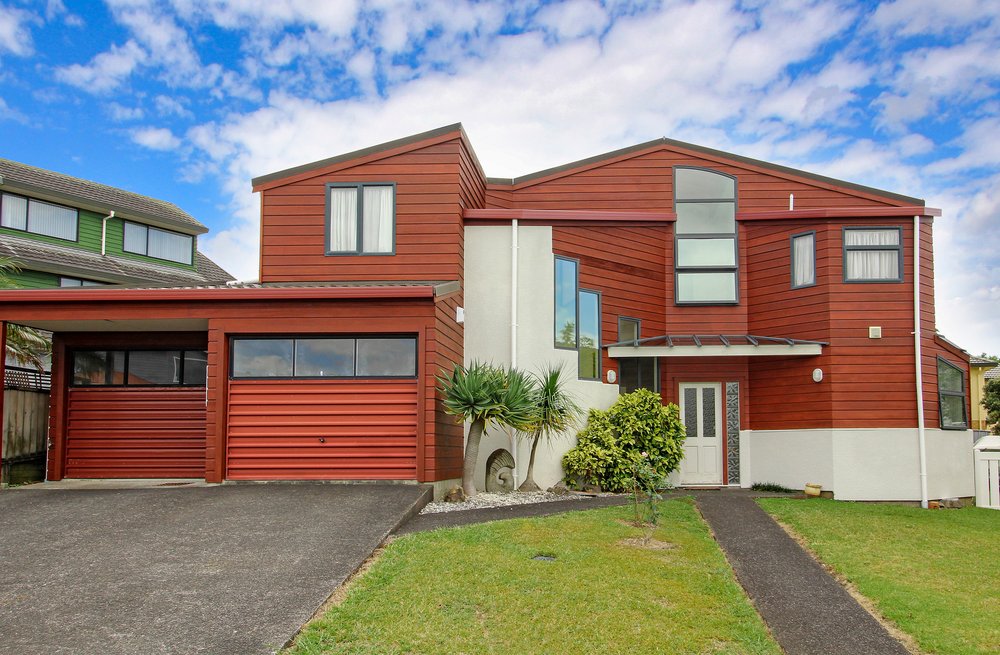
This traditional Cedar home, located in West Harbour, was built in 1989 and has a distinctive red colouring common for the time, a style that has now come full-circle and makes the home feel vibrant and unique.

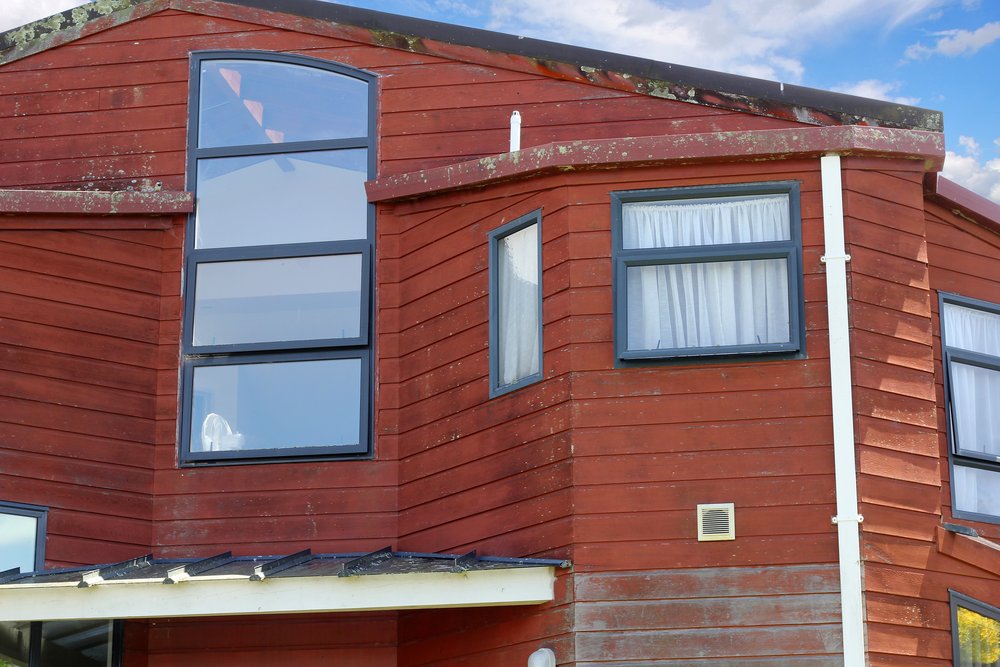
Upon first inspection, it was evident that the Cedar had not been treated for some years, with significant lichen, mould & dirt present. The north face (the back of the property) was very broken down, with porous boards that had started to cup and had been left 3 or 4 years too long without recoating.

As we needed to erect scaffolding to access the upper stories, the customer also asked if we could refresh their bargeboards with a new coat of paint.

This property is an excellent demonstration of the resilience of Cedar as a superior cladding material. Even after years of neglect, Cedar can be renewed with a wash and recoat, followed by regular maintenance to maintain its natural beauty.

cedar-restoration-before cedar-restoration-after

The Maintenance Process

The first step in the maintenance process is a chemical wash from roofline to ground using a penetrating surfactant and soft wash. Particular attention is paid to the cladding, removing all organic material from the timber in preparation for the treatment.

Following the wash, we treated the timber with Resene Woodsman Waterborne stain. Unlike the original stain, the new generation of oil stains are emulsified in water instead of solvents, which is better for the environment, and come in a range of colours.

cedar-restoration-before cedar-restoration-after

The south face of the house (which is the front of the property, as seen in the images) was reasonably protected from the sun and just needed a wash, lichen removal and a recoat. The north face required 3 solid coats of stain to bring the boards back up to standard.

To restore the bargeboards, we removed the existing spouting, filled the holes, lightly sanded to prime, then applied 2 coats of 100% acrylic paint.

Challenges with Older Homes

Many older homes are exposed to the sun for extended periods without regular maintenance and require additional treatment. The north face of this property was particularly weathered and required a stronger washing process and more stain applications to bring the Cedar back to life.

Stains produced back in the day were also very strong, almost like a hybrid paint, and were designed to stop the timber aging rather than enhance the natural beauty. This can make it difficult to work with, especially if you want to change the colour or transition to an oil.

The most cost-effective solution is to enhance what is already there, which is the approach we took with this property.

Ongoing Maintenance Requirements

The property is now set for another 2 or 3 summers before needing another recoat on the exposed faces. The southern face can sit comfortably for another 5-7 years with only a light wash to remove airborne pollutants from the surface.

The Final Outcome

cedar-restoration-before cedar-restoration-after

The end result was a stunning transformation!

We were able to restore the Cedar to its former glory, while retaining the unique look of the red-stained timber. As we were given the opportunity to maintain the whole house, our team was able to take care of even the smallest details, giving the whole property a new lease of life.

We even cleaned up the letterbox and applied the same stain, the finishing touch on a very satisfying job!

Showing 1 - 10 of 18

Subscribe

Sign up to our quarterly newsletter for all the latest Cedar tips and expert advice.